SaaS Product Support: A Game Changer For Customer Retention

SaaS Product Support: A Game Changer For Customer Retention

By Rasmita Patro

In the competitive landscape of Software-as-a-Service (SaaS), the ability to retain customers is essential for achieving ongoing success and growth. Unlike traditional software companies, SaaS companies operate on a subscription-based model, making customer retention directly tied to revenue and growth. Retaining customers goes beyond just keeping them on board; it’s about ensuring their satisfaction, success, and loyalty. This comprehensive guide provides insights into how support for cloud-based software significantly enhances customer retention by exploring effective strategies, best practices, and the transformative impact of on fostering customer satisfaction, success, loyalty, and long-term business growth.

The Formula For Customer Retention Success

Customer retention rate (CRR) is crucial for SaaS companies as it measures the proportion of customers who maintain their subscriptions within a defined timeframe, which is essential for sustained business success. The formula for CRR is:

CRR = ((E – N) / S) × 100

Where:

E = Customers at the end of the period
N = New customers acquired during the period
S = Customers at the start of the period

A high CRR translates to a thriving SaaS business. Studies show acquiring first-time buyers can be five times more expensive than retaining existing ones. Here’s why retention holds such significance:

  • Increased Customer Lifetime Value (CLV): Retained customers become familiar with your product, leading to deeper engagement and increased utilization. It translates to a higher CLV, the total revenue a customer generates over their lifetime.
  • Reduced Churn: Customer churn signifies the frequency at which customers terminate their subscriptions, a challenge that effective product support tackles by preemptively meeting customer needs and enhancing their overall satisfaction.
  • Enhanced Customer Satisfaction and Loyalty: Responsive and supportive customer service enhances satisfaction, fostering trust and loyalty, which in turn encourages satisfied customers to advocate for the brand, fueling organic growth through positive word-of-mouth referrals.

The SaaS Product Marketing Company specializes in promoting software-as-a-service solutions to a global audience.

Unleashing The Power Of Data-Driven Customer Support

Customer data is the goldmine of the SaaS world. By leveraging data-driven insights and customer feedback, you can transform your product support into a proactive force for customer retention. Here’s how:

  • Customer Satisfaction Surveys: Regularly collect feedback through surveys to understand customer sentiment, pinpoint pain points, and identify areas for improvement to enrich their overall experience.
  • Customer Behavior Analysis: Analyze user interactions with your product to understand their needs and identify potential roadblocks. Preventive support can address these issues before they snowball into churn.
  • Retention Rate Analysis: Analyze churned customers to identify patterns and trends. It allows you to tailor your support approach to address common customer expectations.
  • Feedback Collection and Analysis: Create multiple feedback loops to collect valuable customer insights. Utilize direct communication channels, social media monitoring, and support ticket analysis to identify areas for improvement.

Building A Customer-Centric Support Strategy

Now that we understand the importance of data let’s explore strategies for the customer experiences and build a robust customer support system that improves retention:

  • Focus on Customer Needs: Prioritize understanding your customers’ needs and expectations. Align your support resources with their pain points and ensure your team possesses the expertise to address them effectively.
  • Embrace a Proactive Approach: Don’t wait for customers to reach out with issues. Utilize data-driven analytics to anticipate potential problems and offer proactive solutions. It could include personalized in-app tutorials or targeted knowledge-based articles.
  • Invest in a Stellar Support Team: Assemble a team of highly skilled and knowledgeable individuals passionate about helping customers. Empower them with the resources and training needed to deliver exceptional service.
  • Establish Service Level Agreements (SLAs): Define specific response times and resolution guidelines for various support channels. It sets clear expectations for both customers and your team.

SaaS Marketing involves leveraging digital platforms, artificial intelligence, and data-driven analytics to promote subscription-based software solutions to targeted audiences effectively.
The Importance Of Customer Retention In SaaS

The Importance Of Customer Retention In SaaS

For the SaaS industry, High customer retention rates are critical as they directly correlate with increased CLV and stable revenue streams. Sustaining customer relationships is often more affordable than acquiring new ones, making it a priority for SaaS providers. High retention rates indicate that customers find value in the service, which in turn leads to better customer satisfaction scores and overall business success.

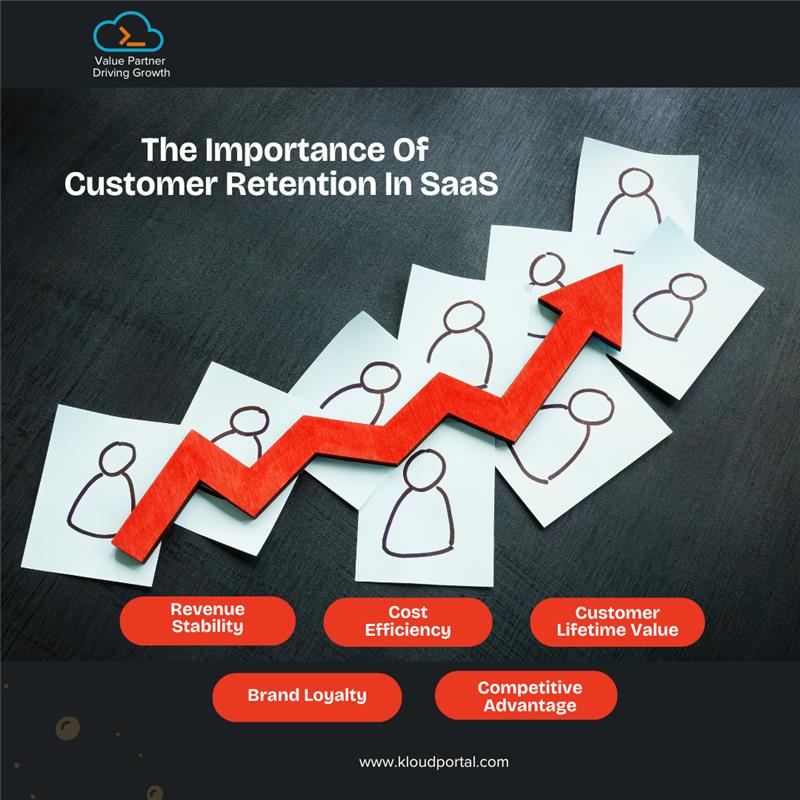
  • Revenue Stability: Recurring revenue from existing customers ensures financial stability and growth.
  • Cost Efficiency: Acquiring first-time buyers is generally more expensive than retaining existing ones.
  • Customer Lifetime Value: Higher retention rates increase the overall lifetime value of a customer.
  • Brand Loyalty: Dedicated customers often become brand advocates, drawing in new clients through positive word-of-mouth recommendations.
  • Competitive Advantage: A high retention rate can provide a strong competitive edge in the SaaS industry.

The Best B2B SaaS Product Marketing Agency offers tailored strategies to improve customer experience and elevate software companies’ visibility and client acquisition in competitive markets.

The Role Of Cloud-based Software Support In Customer Retention

Customer success is crucial in the dynamic SaaS landscape. These companies rely on data-driven decisions to enhance customer experience, prioritize personalized communication, and ensure users feel valued. Regular new feature releases keep customers engaged, fostering trust and satisfaction. This approach not only retains customers but also creates brand advocates, driving sustained growth and innovation in the competitive market.

  • Customer Success Managers: Customer Success Managers (CSMs) play a vital role in sustaining customer relationships ensuring they achieve their evolving goals with the product. CSMs act as the main point of contact for customers, providing personalized support, addressing complex queries, and guiding them through their customer journey.
  • Proactive Customer Support: Proactive support involves addressing potential issues before they become problems. It includes regular check-ins, a feedback loop monitoring user behavior, and using predictive analytics to anticipate customer requirements. Proactive support helps maintain high customer satisfaction and reduce churn rates.
  • Support Team Efficiency: An efficient support team is essential for providing timely and effective assistance to customers. It includes handling support tickets promptly, resolving issues quickly, and maintaining high service standards.
  • Data-driven analytics: Utilizing data-driven analytics and machine learning is essential for comprehending customer behavior and spotting trends. Through thorough analysis of customer data, SaaS companies can make informed decisions aimed at enhancing their products and services. Predictive analytics can also help identify potential churn risks and address them proactively.

Key Takeaways

  • Use data to predict customer needs and fix problems before they happen. Great support = happy customers.
  • Understand what customers need and personalize their experience to keep them engaged and loyal.
  • High customer retention rates translate to a higher Customer Lifetime Value (CLV), stable revenue streams, and a competitive advantage in the SaaS market.

Conclusion

By prioritizing customer success and implementing a data-driven customer support strategy, SaaS companies can transform customer retention from a struggle to a competitive advantage. Keeping current customers happy not only saves costs but also cultivates a loyal customer community that drives sustained growth and prosperity over time.

Frequently Asked Questions

1. How do you calculate the customer retention rate in SaaS?

To calculate the customer retention rate in SaaS, you divide the number of customers retained at the end of a period by the total number of customers at the start of that period and then multiply by 100 to get the percentage.

2. Why is retention important in SaaS?

Retention is crucial in SaaS because it is customer engagement, ensures stable recurring revenue, enhances CLV, and is more cost-effective than acquiring fresh clients.

3. What is the customer retention rate benchmark for SaaS?

Retention rate benchmarks in the SaaS sector vary widely based on industry and company size. However, achieving a retention rate of 85% or higher is widely regarded as successful, with leading SaaS companies frequently achieving churn rates above 90%.
Driving Business Growth Through Effective Data Operations

Driving Business Growth Through Effective Data Operations

By Rasmita Patro

In the digital age, data is the new currency that drives market growth. Effective data operations are pivotal in harnessing the power of consumer data, analytics, and AI to make strategic decision-making that propel businesses forward. This comprehensive guide explores how integrating data into every facet of business processes can lead to increased customer happiness, optimized performance, and sustained competitive advantage.

This guide explores the components of effective data operations and their impact on market growth.

Key Takeaways

  • Effective data operations are not just a necessity, but a gateway to driving significant business growth.
  • Data is not just a collection of numbers, but a powerful tool that can be harnessed to improve customer satisfaction, optimize operations, and gain a competitive edge.
  • Data analytics drives better business decisions by optimizing performance, processes, risk, and resources.
  • The challenges associated with data operations can be effectively addressed, paving the way for a smoother and more efficient data operation.

Key Components of Effective Data Operations

Data has become the cornerstone of modern business operations. Businesses that efficiently handle and analyze data can obtain crucial insights, make calculated decisions, and stimulate growth.

  • Customer data: Collecting and managing client information helps businesses understand customer interactions, preferences, and behavior. This data is essential for tailoring products and services to meet customer needs and enhance satisfaction.
  • Data analytics: Data analytics involves examining datasets to uncover patterns, trends, and insights. It supports data-driven decision-making and strategic planning.
  • Data-driven decision making: Basing decisions on data analysis results in more precise and effective business outcomes, reducing risks and maximizing growth opportunities.
  • Key performance indicators (KPIs): Identifying and tracking KPIs allows businesses to measure performance against objectives, ensuring alignment with strategic goals.
  • Data quality: Ensuring high data quality is essential for accurate analysis and decision-making. Data must be complete, accurate, and reliable.
  • Data governance: Implementing data governance policies ensures data is managed and used responsibly, maintaining compliance with regulations and safeguarding data security.
  • Data visualization: Interactive dashboards and visualizations help key stakeholders understand complex data insights quickly, facilitating strategic decisions.
  • Data hub: Storing vast amounts of structured and unstructured data in a data hub enables flexible and scalable data analysis.

Finding the ideal best Digital Marketing Agency may seem daunting. However, our guide simplifies the process by tailoring recommendations to your unique requirements and objectives.

How Can We Use Data To Drive Business Expansion?

Data enables businesses to comprehend customer needs, streamline operations, and make educated decisions that drive growth.

  • Customer insights: Analyze data collection to identify preferences, buying patterns, and pain points. It allows for targeted marketing campaigns, personalized experiences, and the development of services that resonate with your audience.
  • Improved operations: Utilize data to streamline processes, identify inefficiencies, and optimize resource allocation. It leads to cost reduction, faster turnaround times, and more efficient new business models.
  • Data-driven decisions: Base strategic choices on data insights, not intuition. Data reveals business trends, competitor activity, and potential opportunities, leading to decisions that drive growth.
  • Predictive analysis: Statistical models to anticipate forthcoming consumer behavior and business trends. It enables proactive strategies for product development, marketing initiatives, and resource allocation.

Unleashing the power of data for business expansion? Look no further than partnering with the Best digital transformation company in Hyderabad to leverage data insights and optimize your online presence for local success.

Leveraging Data Analytics To Enhance Business Processes

Data analytics enables business professionals to enhance decision-making by optimizing performance, processes, risk, and resources. Utilizing data analytics allows businesses to proactively improve overall efficiency. The key areas include

  • Performance Measurement
  • Process Optimization
  • Risk Management
  • Resource Allocation
Strategies for Growth-Focused Data Operations

How Does Data Drive Business?

Data is the fuel that propels modern business. Data analytics unlocks valuable insights that drive company performance.

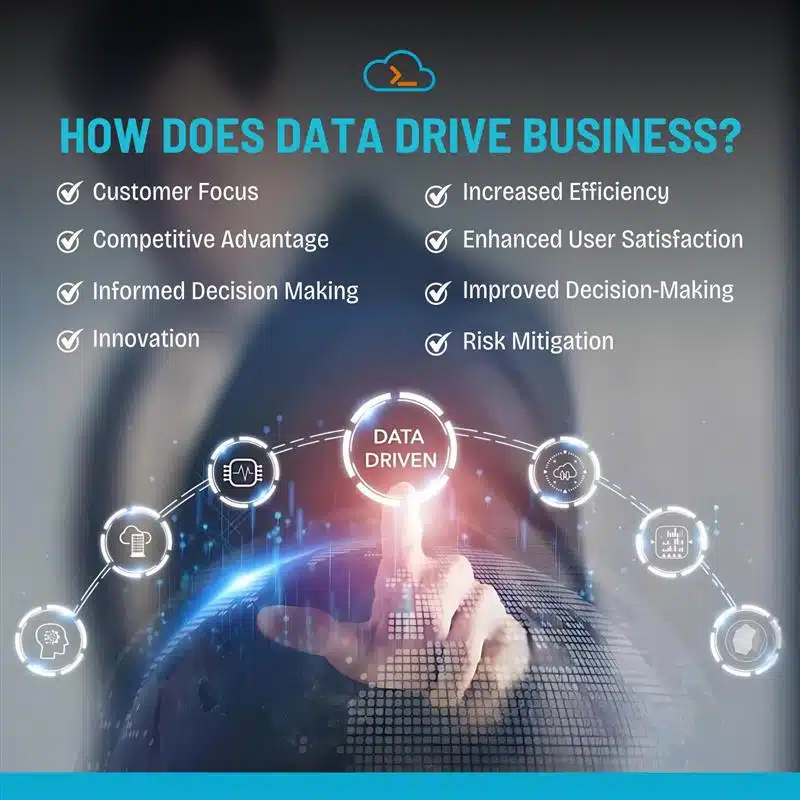
  • Customer Focus: Data allows for a deeper understanding of customer preferences and behavior. It enables businesses to become more customer-centric, leading to increased customer satisfaction and loyalty.
  • Competitive Advantage: Data-driven insights reveal industry trends, competitor strategies, and emerging markets. It enables businesses to stand out by providing inventive solutions and seizing emerging opportunities.
  • Informed Decision Making: Data removes guesswork from decision-making. Informed decisions are more likely to be successful, leading to improved business performance and achievement of strategic objectives.
  • Innovation: Data analytics helps identify customer needs and market gaps, fostering innovation in product development and service offerings, leading to increased business value.
  • Increased Efficiency: Data analytics streamlines processes, identifies inefficiencies, and enables data-driven resource allocation, leading to improved operational efficiency and cost reduction.
  • Enhanced User Satisfaction: Data analytics helps to personalize customer experiences, address pain points proactively, and develop products/services that meet their needs, leading to increased customer happiness and loyalty.
  • Improved Decision-Making: Data-driven decisions are more informed and strategic, leading to better outcomes and improved corporate performance across all areas.
  • Risk Mitigation: Predictive analytics helps identify and mitigate potential risks before they impact business processes, ensuring business continuity and financial stability.

Future Trends And Practical Applications In Data Operations

  • Artificial Intelligence (AI): AI and ML are set to have a substantial impact on automating data analysis, delivering deeper insights and strengthening predictive capabilities.
  • Data Integration: Integrating data from various sources will become increasingly important for comprehensive analysis and decision-making.
  • Advanced Data Visualization: Enhanced visualization tools will enable more interactive and intuitive exploration of data insights.
  • Increased Focus on Data Governance: As data privacy regulations evolve, businesses will need to strengthen data governance practices to ensure compliance and build trust.
  • Consumer Data Management: By maintaining comprehensive reference data, businesses can track customer feedback, preferences, and interactions to improve service delivery and satisfaction.
  • Data Analytics in Marketing: Utilizing data analytics for marketing strategies helps businesses understand consumer campaigns and their behavior to maximize marketing ROI.
  • Data-Driven Product Development: Using data to inform product development ensures that new products meet customer needs and preferences, enhancing market success.

Challenges

While effective data operations can drive business growth, several challenges may arise.

  • Data accuracy issues: Ensuring data accuracy and completeness can be challenging. Implementing robust data accuracy management processes can mitigate this issue.
  • Data protection concerns: Protecting sensitive data from breaches and unauthorized access is critical. Investing in advanced security measures and regular audits can enhance data protection.
  • Data integration complexities: Integrating data from disparate sources can be complex. Utilizing data lakes and advanced integration tools can streamline this process.
  • Skill gaps: The demand for skilled data analysts is high. Allocating resources to training and development initiatives can aid in bridging skill disparities.

Conclusion

Effective data operations are essential for driving business scaling in today’s competitive landscape. By harnessing the power of consumer data, data analytics, predictive analytics, and other key components, businesses can make strategic decisions, optimize operations, and stay ahead of market trends. As data continues to play a pivotal role in business strategy, investing in robust data management and analysis capabilities will be crucial for achieving long-term success.

FAQs

Q. How can I safeguard the security of my business data?

A: Cybersecurity is paramount. Implement robust security measures like access controls, encryption, and regular security audits. Partner with a reputable cyber security provider for additional expertise.

Q. How can businesses ensure data quality?

A: Businesses can ensure the quality of data by implementing robust data management frameworks, employing data scientists, and using advanced technology to manage and validate data sources.

Q. What role does AI play in data operations?

A: AI’s critical function lies in analyzing extensive data sets, delivering predictive insights, and automating tasks, thus boosting efficiency and underpinning novel business frameworks.

Has Technology Diminished Customer Service? 

Has Technology Diminished Customer Service? 

By Rasmita Patro

The rise of digital technologies has undeniably transformed the customer service landscape. As customer service leaders navigate the increasingly significant impact on service quality, the question arises: has technology been a boon or a bane?

This report delves into the relationship between technology and customer service, examining its potential to enhance customer experience (CX) and boost customer retention while also recognizing the challenges it brings to customer service managers.

The explosion of digital technologies and artificial intelligence (AI) has dramatically reshaped the way companies approach customer service. These innovations have introduced new efficiencies and capabilities, but there is ongoing debate about whether these advancements have compromised service quality. However, there is an ongoing debate about whether they have compromised service quality.

This article explores this topic, addressing how robotics has impacted customer service and highlighting its benefits, drawbacks, and future trajectory.

Key Takeaways

  • Businesses must find the right balance between automation (self-service portals, chatbots) and human interaction for complex issues.
  • Advanced AI and natural language processing will play a bigger role in predicting customer needs and offering personalized solutions.
  • Technology should enhance, not replace, the human element in customer service. Offering options like live chat and phone support is crucial.

The Two Sides of the Coin

Machinery offers a multitude of tools for customer service and support teams to elevate their interactions with customers. On the positive side, technology has enabled faster communication, more direct results through self-service options, reduced costs through automation, and improved customer outcomes by providing better visibility into customer preferences. Here’s how:

  • Improved efficiency and availability: Digital platforms like self-service portals, FAQs, and chatbots can handle routine inquiries, freeing up customer service agents (CSAs) to focus on complex client issues. This not only reduces waiting times but also enables 24/7 availability, catering to increasingly global and digital-first customer bases.
  • Data-driven insights: Customer relationship management (CRM) software and data analytics empower businesses to gain deep insights into customer behavior and preferences, ultimately informing strategic decision-making. This also enables businesses to personalize support, anticipate customer needs, and proactively address potential issues.
  • Enhanced customer experience: Features like live chat, co-browsing, and video conferencing enable richer customer interactions, allowing CSAs to understand customer needs better and provide more effective solutions. AI-powered chatbots can offer immediate support, answer basic queries, and even escalate complex issues to human agents.

However, tech innovations can also lead to poor quality customer service if not implemented strategically. Here are some potential pitfalls:

  • Impersonal interactions: Customers often find automated solutions impersonal and frustrating, especially when dealing with complex issues. Intricate problems might require a human agent, but navigating automated menus and long wait times can be frustrating. Overreliance on chatbots without human oversight can lead to misunderstandings and unresolved problems.
  • Dehumanization of service: Overdependence on machinery can create a sense of detachment between companies and their customers. Replacing human interaction can damage customer relationships and loyalty.
  • Employee turnover: Increased automation can lead to repetitive tasks for CSAs, resulting in decreased job satisfaction and higher staff turnover. Businesses need to invest in training and development to ensure CSAs can leverage technology effectively and offer exceptional support.

Many companies are facing record levels of customer churn due to poor customer service, with its understaffed contact center and ineffective support team failing to resolve customer problems cost-effectively. There is also a risk of companies adopting technology for its own sake rather than to solve specific customer problems. And while technology should assist human agents, it should not completely replace the option for customers to speak to a real person for a more personalized experience.

Comprised of experienced professionals, our team is passionate about crafting impactful solutions that optimize your return and fuel continuous business expansion.

The Impact of Technology On Customer Service

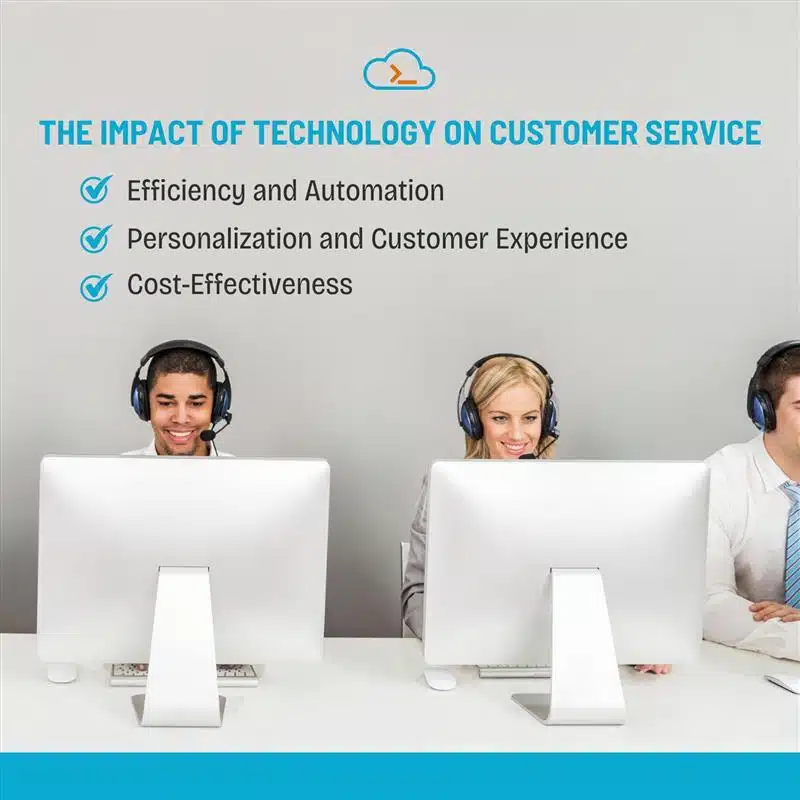
  • Efficiency and automation: Software has allowed the customer service team to handle an increasing volume of customer queries with greater efficiency. Automated procedures and artificial intelligence technologies, such as chatbots and virtual assistants, help solve basic tasks and common customer issues, significantly reducing wait times and operational costs.
  • Personalization and customer experience: AI and natural language processing (NLP) enable personalized support by analyzing customers’ data to provide relevant information and tailored solutions. This personalization enhances the overall customer journey, meeting customer expectations for quick and effective service.
  • Cost-effectiveness: Digital systems, including self-service options like FAQs and knowledge bases, empower customers to find answers independently. This equipment streamlines customer service operations, allowing the company to operate with leaner teams and achieve greater price efficiency. Many local businesses are seeing significant growth by leveraging our specialized Digital Marketing Services to increase their online visibility and engagement.
The Impact Of Technology On Customer Service

Customer Satisfaction and Expectations

  • Improved interactions: A key concern surrounding this technology is the potential for a decline in personal interaction during customer service encounters.
  • Meeting expectations: Modern customers expect fast and efficient service. Technologies like AI-driven chatbots and automated email systems that provide instant responses to common queries, and automated email systems that send personalized responses, help meet these expectations by offering real-time support and reducing response times, which is crucial for maintaining customer loyalty.
  • Enhancing customer lifetime value: Quality customer service facilitated by technology can increase lifetime customer value. Nurturing satisfied customers into brand loyalists translates to repeat business and positive word-of-mouth, ultimately fueling a company’s long-term success.

The Role of Business Leaders and Customer Support Teams

  • Strategic integration: Corporate leaders, including senior directors, play a significant role in integrating emerging technologies into customer service strategies. Effective leadership ensures that software enhances rather than diminishes customer service quality.
  • Balancing technology and human interaction: Customer service teams must find a balance between automated procedures and human interaction. While devices can handle simple tasks, human agents are essential for solving complex issues and providing excellent support.
  • Training and development: Ongoing training and development play a vital role in helping customer service representatives adjust to evolving technologies. Ensuring that service teams are well-versed in using AI and CRM systems can improve overall service quality.

Our Digital Marketing Agency in Hyderabad specializes in creating customized campaigns that help businesses thrive in the competitive online marketplace.

The Future of Customer Service: A Harmonious Partnership

Research shows that more than half of customers are willing to pay more for a company that provides excellent customer support. The client experience landscape is constantly evolving in tandem with technological advancements. Businesses must be proactive, embracing cutting-edge AI and automation solutions while simultaneously nurturing strong customer relationships through personalized and empathetic interactions.

  • Advanced AI and Personalization: The future of customer service lies in advanced artificial intelligence and deeper personalization. Leveraging AI technologies will increase their significance in predicting customer needs and delivering customized solutions.
  • Omnichannel support: Companies will continue to develop omnichannel support systems that provide seamless user experiences across various platforms, from chatbots to live agents.
  • Small businesses and technology: Even local businesses can leverage their budget-friendly technological solutions to enhance customer service. Affordable artificial intelligence tools and self-service options can help small companies provide high-quality support without extensive resources.

The Role of Customer Service Managers

Customer service managers play a crucial role in navigating the technology revolution. Here are some key areas of customer service agent focus:

  • Choosing the right technologies: Evaluating new technologies based on their ability to improve customer satisfaction, solve customer issues efficiently, and support a customer-centric culture.
  • Investing in employee training: Equipping CSAs with the skills to leverage software effectively and deliver exceptional customer service.
  • Measuring customer experience: Collecting customer feedback and data to monitor and improve customer interactions across all channels continuously.

Conclusion

Technology itself isn’t inherently good or bad for customer service. It depends on how companies implement it. The technological revolution in customer service demands a delicate equilibrium. Companies must find the sweet spot between leveraging automated processes and prioritizing human interaction.

Leveraging advanced AI and CRM systems can improve customer satisfaction, increase loyal customers’ lifetime value, and maintain high standards of service. Company leaders and customer service teams must work together to ensure that machinery enhances customer relationship management rather than diminishes customer service quality.

Frequently Asked Questions (FAQs)

Q1: How can businesses improve customer service using emerging technology?

A: Business can improve their customer support by integrating AI-driven chatbots, leveraging natural language understanding for personalized support and customer retention, and utilizing CRM systems, which are essential for efficiently managing and analyzing customer interactions.

Q2: What are some common challenges faced by customer care teams with the rise of technology?

A: Common challenges include managing customers’ expectations, ensuring the accuracy of automated responses, and maintaining the human element in customer communications.

Q3: How does AI technology benefit your customer service team and agents?

A: By automating routine inquiries and delivering instant access to relevant information for customer inquiries, AI empowers customer service agents to tackle more intricate customer problems. It not only boosts overall efficiency but also fosters job satisfaction among agents.

Q4: Can small businesses benefit from advanced customer service technologies?

A: Yes, startups can benefit from price-effective solutions for customer service, like self-service platforms and AI-powered tools that enhance customer service without requiring extensive resources.

How to Collect Email Addresses from Your Website Visitors

How to Collect Email Addresses from Your Website Visitors

By Rasmita Patro

Acquiring e-mail addresses from your online audience is essential for establishing an effective digital marketing strategy. A strong email list allows you to communicate directly with potential customers, nurture relationships, and drive conversions. But how do you effectively gather these e-mail addresses without being intrusive or annoying? In this guide, we will investigate different approaches and tools to legally and effectively collect email addresses, ensuring a bank of strong e-mail IDs to enhance your marketing endeavors.

Key Takeaways

  • Email marketing helps you connect with customers, build trust, and boost sales.
  • Use signup forms, offer free stuff (lead magnets), and get permission first.
  • Offer clear forms on your website and social media.
  • Free e-books, discounts, or webinars in exchange for email addresses.
  • Keep it legal – get consent, follow anti-spam laws, and let people unsubscribe easily.

Importance of Collecting E-Mail Addresses

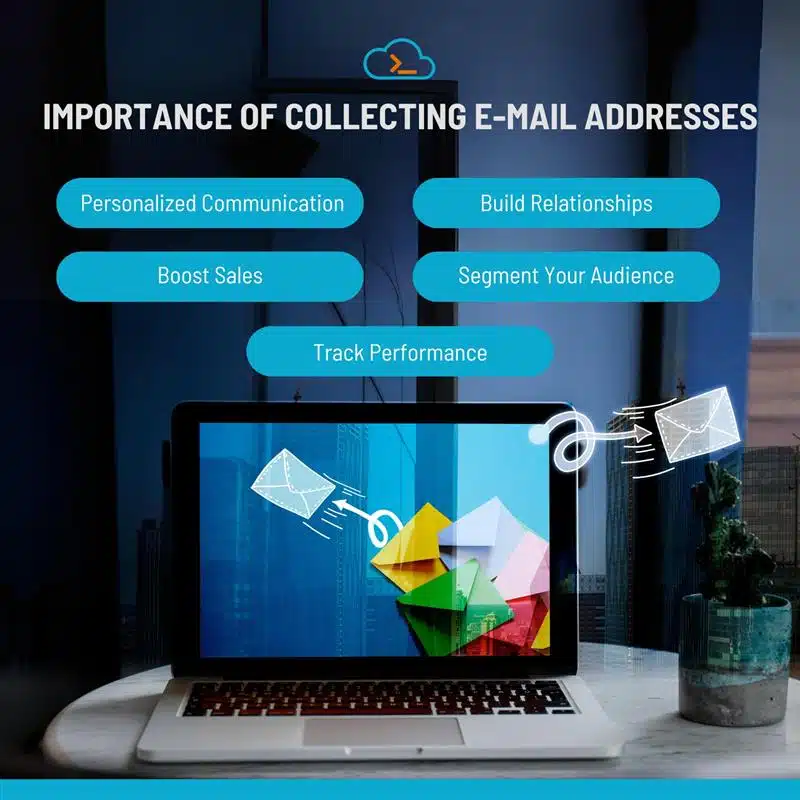
Utilizing e-mail marketing can effectively engage your audience, advertise products, and stimulate conversions. Collecting visitors’ email addresses allows you to:

  • Personalized communication – E-mail offers a direct channel to send personalized messages to your audience.
  • Build relationships – Regular e-mail marketing updates help foster trust and loyalty.
  • Boost sales – E-mail campaigns can drive traffic to your website and increase sales.
  • Segment your audience – Collecting e-mails allows audience segmentation, enabling targeted marketing.
  • Track performance – E-mail marketing tools provide analytics on open rates, click-through rates, and conversions.

Discover the Best Digital Marketing Services in Hyderabad, customized to enhance your online visibility and propel business expansion. The expert teams specialize in delivering targeted strategies and impactful campaigns to help you achieve your marketing goals.

Strategies to Collect E-Mail Addresses

1. Utilize opt-in forms

Opt-in forms are essential for collecting visitor’s e-mail addresses. They represent the most straightforward method to encourage website visitors to join your e-mail list.

Types of opt-in forms

  • Signup forms – Put them in prominent locations like the bottom section, top area, or side panel of your web page for easy visibility.
  • Pop-up forms – Activate these forms according to user actions, such as duration spent on a page or scrolling behavior.
  • Landing pages – Create dedicated pages that focus solely on converting visitors into e-mail subscribers.
  • Exit-intent pop-ups – Use technology to detect when a visitor is about to leave your site and present a valuable offer.

2. Offer valuable content

Lead magnets are incentives that encourage visitors to exchange their e-mail IDs for valuable information.

Examples of  Lead Magnets

  • eBooks – Provide in-depth information on a relevant topic.
  • Whitepapers – Offer comprehensive analyses or reports.
  • Checklists – Share step-by-step guides.
  • Webinars – Host live or recorded sessions on topics of interest.
  • Discounts and coupons – Offer special deals for subscribers.

3. Incorporate interactive components

This tool can engage visitors and prompt them to share their e-mail addresses.

Interactive components

  • Quizzes – Offer personalized results in exchange for an e-mail address.
  • Surveys – Collect feedback and insights while gathering e-mail addresses.
  • Contests and giveaways – Encourage participation by offering prizes for e-mail subscriptions.

4. Leverage e-mail finder tools

These tools can help you discover and verify the e-mail addresses of potential customers.

Popular e-mail lookup tools

  • Finds e-mail addresses based on domain names.
  • Enriches contact info with additional data.
  • Locates e-mail addresses with high accuracy.

5. Promote through social media accounts

Social media platforms are excellent channels for website traffic to your e-mail signup forms.

Social media strategies

  • Regular posts – Share links to your signup form or landing page.
  • Targeted ads – Run ads promoting your e-mail list.
  • Events – Host webinars or live sessions that require e-mail registration.

Cooperating with the Best Digital Marketing Agency in India can transform your online approach and propel your business to unprecedented success.

6. Implement a referral program

Referral programs encourage your existing followers to advocate for your e-mail list to others.

Setting up a referral scheme

  • Offer incentives – Provide rewards like discounts or restricted content for referrals.
  • Use referral tools – Platforms like Referral Candy can help manage your referral scheme.

7. Optimize Call to Action (CTA)

Your CTA should be compelling and clearly guide visitors to provide their e-mail addresses.

Effective CTAs

  • Clear and direct – Use phrases like “Subscribe Now” or “Get Your Free Guide.”
  • Create urgency – Use terms like “Limited Time Offer” to encourage quick action.
  • Highlight benefits – Clearly state what the visitor will receive in exchange for their e-mail.

8. Utilize exit-intent technology

Exit-intent technology triggers a pop-up form when a visitor is about to leave your site, encouraging them to subscribe.

Tools for exit-intent pop-ups

  • Optinmonster – A popular list-building tool for creating exit pop-ups.
  • Sumo – Offers various pop-up options, including exit pop-ups.

9. Create a visually appealing website

A well-designed website can significantly enhance e-mail registrations.

Design tips

  • High-quality images – Use visuals to attract attention.
  • Simplicity – Avoid clutter to ensure forms are easy to find and use.
  • Mobile optimization – Ensure your site and forms are mobile-friendly.

10. Integrate e-mail collection with e-commerce stores

For online stores, there are several touchpoints where you can collect email addresses

E-commerce strategies

  • Checkout process – Include an option to subscribe during checkout.
  • Order confirmation pages – Offer discounts or special offers on the confirmation page.
  • Account creation – Prompt customers to establish an account and subscribe seamlessly throughout the process.
Importance of Collecting E-mail Addresses

Legal Considerations

Gathering e-mail IDs should adhere to data protection laws to prevent legal complications and preserve trust.

  • Obtain explicit consent – Always get explicit consent from visitors before adding them to your e-mail list. It’s typically done through opt-in forms.
  • Comply with data protection Laws – Be aware of and adhere to applicable laws, including GDPR in Europe and the CAN-SPAM Act in the USA.
  • Provide easy unsubscribe options – Each e-mail you send must provide an easy method for recipients to opt out.
  • Clearly state how e-mails will be used – Ensure clarity regarding the utilization of collected e-mail addresses and incorporate a link to your privacy policy.
  • Store data securely – Ensure the e-mail addresses you collect are stored securely to prevent unauthorized access.

Digital Marketing Services are essential tools for expanding your brand’s reach online and engaging with customers effectively. Utilizing an array of digital platforms and strategies enables you to build relationships, engage with your target audience, and drive conversions, thereby growing your business in the digital world.

Conclusion

Acquiring e-mail addresses from your website visitors is fundamental to crafting a successful e-mail marketing strategy. By employing a mix of opt-in forms, engaging content, interactive elements, and social media promotion, you can grow your e-mail list effectively. Always ensure you collect e-mails legally by obtaining explicit consent, complying with data protection laws, and providing easy unsubscribe options. Executing these tactics will aid in constructing a loyal subscriber base, helping drive sustained success for your business.

FAQS

1. How do I get the E-mail addresses of registered users of a website?

When users register on your website, you can collect their e-mail addresses as part of the registration process. Ensure you inform users that their e-mail will be utilized for marketing objectives and acquire their explicit consent.

2. How to legally collect E-mail addresses?

To legally collect e-mail addresses, always obtain explicit consent, comply with data protection laws, provide easy unsubscribe options, clearly state how e-mails will be used, use double opt-in, and store data securely.

4. How can I increase E-mail Signups on my website?

Increase e-mail signups by using subscription forms, offering valuable content, incorporating engaging features, leveraging social media, optimizing CTAs, providing exclusive access to exclusive content, and utilizing exit-intent technology.

What is BOOT Model Of Execution And Why Is It More Relevant To Current Times?

What is BOOT Model Of Execution And Why Is It More Relevant To Current Times?

By Rashmita Patro

The Build-Own-Operate-Transfer (BOOT) model is a transformative engagement framework in technology projects, enabling organizations to leverage external expertise for the development, operation, and eventual ownership of complex technology solutions. Under this model, a specialized partner is responsible for building and owning the technology platform or infrastructure, operating it to ensure optimal performance and innovation, and ultimately transferring full control to the client after a defined period.

This approach is particularly important in today’s fast-evolving digital landscape, where rapid technological change, the need for specialized skills, and the demand for scalable solutions make traditional project delivery models less effective. By adopting the BOOT model, companies can minimize upfront investment, access cutting-edge technology and talent, and mitigate operational risks, all while retaining the option to internalize mature, fully operational systems for long-term strategic advantage.

What Is the BOOT Model?

The BOOT (Build, Own, Operate, Transfer) model is a strategic project delivery framework widely used in the technology sector, particularly for large-scale software, IT infrastructure, and digital platform initiatives. In this model, a development partner or service provider is responsible for building the technology solution, owning and operating it for an agreed period, and eventually transferring ownership and operational control to the client organization.

Key Stages of the BOOT Model

  • Build: The service provider designs and develops the technology solution—this could be a software platform, a data center, or a specialized application—tailored to the client’s requirement.

  • Own:Unlike some other engagement models, the provider retains ownership of the technology during the operational phase. This ownership enables them to customize, brand, and adapt the platform as needed, ensuring it evolves in line with technological advancements and business needs.

  • Operate:The provider manages the day-to-day operations, maintenance, and support of the solution. They are responsible for ensuring performance, security, and service quality, and they may monetize the platform through user fees, licensing, or service charges during this period.

  • Transfer:After the specified period, ownership and operational control of the technology are transferred to the client. This transition is typically well-planned to ensure business continuity and knowledge transfer.

Why Choose the BOOT Model in Technology?

The BOOT model is particularly advantageous for organizations undertaking complex, capital-intensive technology projects. Here’s why:

  • Reduced Upfront Investment: The client avoids large initial capital outlays, as the provider finances and builds the solution.

  • Access to Expertise: Clients benefit from the provider’s technical expertise, innovation, and operational experience, leading to faster and more efficient project execution.

  • Revenue Generation: The provider can recover costs and generate revenue during the ownership period, incentivizing them to maintain high service standards.

  • Risk Mitigation: The operational and financial risks during the build and operate phases are largely borne by the provider, reducing the client’s exposure.

  • Long-Term Focus: The model is ideal for long-term projects where ongoing innovation, adaptability, and operational excellence are critical.

    BOOT Model in Practice: A Technology Example

    A common use of the BOOT model in technology is the establishment of Offshore Development Centers (ODCs) or the development of enterprise platforms (e.g., ERP or CRM systems). For example, a company may engage a BOOT provider to build and operate a custom software platform. The provider owns and operates the platform, manages updates, ensures compliance, and monetizes through service fees. After a set period, the platform, along with all operational knowledge and assets, is transferred to the client, who then takes over full control.

    BOT vs BOOT: The Core Difference

    The main distinction between the BOOT and BOT models in technology lies in ownership during the operational phase:

    Aspect BOT Model BOOT Model
    Ownership Client retains ownership; provider operates only Provider owns and operates during the contract
    Customization Limited by client’s ownership Provider can freely adapt and brand the platform
    Monetization Provider cannot monetize beyond service fees Provider can monetize through various revenue streams
    Transfer At end of period, operations revert to client At end of period, ownership and operations transfer

    In summary, while the BOT model is suited for shorter-term or less complex projects where the client wants to retain control, the BOOT model is ideal for long-term, high-investment technology initiatives where the provider’s ownership and operational involvement drive innovation, efficiency, and risk-sharing.

    Challenges and Considerations

    • Complex Contracts: BOOT agreements require detailed legal, operational, and financial planning, making negotiations lengthy and complex.

    • Transition Risks: The final transfer phase demands careful management to ensure seamless handover and sustained performance.

    • Dependency: Clients may become reliant on the provider’s expertise, so exit and transition strategies must be clearly defined.

    Conclusion

    The BOOT model is a powerful engagement strategy for technology projects that demand significant investment, expertise, and long-term operational excellence. By leveraging the provider’s ownership and operational capabilities, organizations can accelerate innovation, reduce upfront costs, and ensure sustainable growth—culminating in a smooth transfer of a fully operational, mature technology solution.


    Sources/References:

    1. BOOT Model, Build Own Operate Transfer
    2. What is BOOT?
    3. BOT and BOOT models

    Frequently asked questions (FAQs)

    1. How is the BOOT model relevant to IT and digital transformation projects? 

    The BOOT model is essential for large IT projects like data centers and cloud services. It speeds up digital transformation by leveraging private investment, lowering initial costs and risks.

    2. What are the key benefits of using the BOOT model for smart infrastructure development?

    BOOT enables quicker project delivery, better risk-sharing, and long-term accountability, aligning innovation with execution for sustainable results and high ROI.

    3. How does BOOT compare to other delivery models like BOT or BOO? 

    Unlike BOT, which doesn’t retain ownership, or BOO, which lacks transfer, BOOT maintains control over the entire project lifecycle with eventual ownership transfer making it ideal. 

    We use cookies to ensure that we give you the best experience on our website. If you continue to use this site we will assume that you are happy with it.

    Cookies settings
    Accept
    Privacy & Cookie policy
    Privacy & Cookies policy
    Cookie name Active

    Privacy Policy

    What information do we collect?

    We collect information from you when you register on our site or place an order. When ordering or registering on our site, as appropriate, you may be asked to enter your: name, e-mail address or mailing address.

    What do we use your information for?

    Any of the information we collect from you may be used in one of the following ways: To personalize your experience (your information helps us to better respond to your individual needs) To improve our website (we continually strive to improve our website offerings based on the information and feedback we receive from you) To improve customer service (your information helps us to more effectively respond to your customer service requests and support needs) To process transactions Your information, whether public or private, will not be sold, exchanged, transferred, or given to any other company for any reason whatsoever, without your consent, other than for the express purpose of delivering the purchased product or service requested. To administer a contest, promotion, survey or other site feature To send periodic emails The email address you provide for order processing, will only be used to send you information and updates pertaining to your order.

    How do we protect your information?

    We implement a variety of security measures to maintain the safety of your personal information when you place an order or enter, submit, or access your personal information. We offer the use of a secure server. All supplied sensitive/credit information is transmitted via Secure Socket Layer (SSL) technology and then encrypted into our Payment gateway providers database only to be accessible by those authorized with special access rights to such systems, and are required to?keep the information confidential. After a transaction, your private information (credit cards, social security numbers, financials, etc.) will not be kept on file for more than 60 days.

    Do we use cookies?

    Yes (Cookies are small files that a site or its service provider transfers to your computers hard drive through your Web browser (if you allow) that enables the sites or service providers systems to recognize your browser and capture and remember certain information We use cookies to help us remember and process the items in your shopping cart, understand and save your preferences for future visits, keep track of advertisements and compile aggregate data about site traffic and site interaction so that we can offer better site experiences and tools in the future. We may contract with third-party service providers to assist us in better understanding our site visitors. These service providers are not permitted to use the information collected on our behalf except to help us conduct and improve our business. If you prefer, you can choose to have your computer warn you each time a cookie is being sent, or you can choose to turn off all cookies via your browser settings. Like most websites, if you turn your cookies off, some of our services may not function properly. However, you can still place orders by contacting customer service. Google Analytics We use Google Analytics on our sites for anonymous reporting of site usage and for advertising on the site. If you would like to opt-out of Google Analytics monitoring your behaviour on our sites please use this link (https://tools.google.com/dlpage/gaoptout/)

    Do we disclose any information to outside parties?

    We do not sell, trade, or otherwise transfer to outside parties your personally identifiable information. This does not include trusted third parties who assist us in operating our website, conducting our business, or servicing you, so long as those parties agree to keep this information confidential. We may also release your information when we believe release is appropriate to comply with the law, enforce our site policies, or protect ours or others rights, property, or safety. However, non-personally identifiable visitor information may be provided to other parties for marketing, advertising, or other uses.

    Registration

    The minimum information we need to register you is your name, email address and a password. We will ask you more questions for different services, including sales promotions. Unless we say otherwise, you have to answer all the registration questions. We may also ask some other, voluntary questions during registration for certain services (for example, professional networks) so we can gain a clearer understanding of who you are. This also allows us to personalise services for you. To assist us in our marketing, in addition to the data that you provide to us if you register, we may also obtain data from trusted third parties to help us understand what you might be interested in. This ‘profiling’ information is produced from a variety of sources, including publicly available data (such as the electoral roll) or from sources such as surveys and polls where you have given your permission for your data to be shared. You can choose not to have such data shared with the Guardian from these sources by logging into your account and changing the settings in the privacy section. After you have registered, and with your permission, we may send you emails we think may interest you. Newsletters may be personalised based on what you have been reading on theguardian.com. At any time you can decide not to receive these emails and will be able to ‘unsubscribe’. Logging in using social networking credentials If you log-in to our sites using a Facebook log-in, you are granting permission to Facebook to share your user details with us. This will include your name, email address, date of birth and location which will then be used to form a Guardian identity. You can also use your picture from Facebook as part of your profile. This will also allow us and Facebook to share your, networks, user ID and any other information you choose to share according to your Facebook account settings. If you remove the Guardian app from your Facebook settings, we will no longer have access to this information. If you log-in to our sites using a Google log-in, you grant permission to Google to share your user details with us. This will include your name, email address, date of birth, sex and location which we will then use to form a Guardian identity. You may use your picture from Google as part of your profile. This also allows us to share your networks, user ID and any other information you choose to share according to your Google account settings. If you remove the Guardian from your Google settings, we will no longer have access to this information. If you log-in to our sites using a twitter log-in, we receive your avatar (the small picture that appears next to your tweets) and twitter username.

    Children’s Online Privacy Protection Act Compliance

    We are in compliance with the requirements of COPPA (Childrens Online Privacy Protection Act), we do not collect any information from anyone under 13 years of age. Our website, products and services are all directed to people who are at least 13 years old or older.

    Updating your personal information

    We offer a ‘My details’ page (also known as Dashboard), where you can update your personal information at any time, and change your marketing preferences. You can get to this page from most pages on the site – simply click on the ‘My details’ link at the top of the screen when you are signed in.

    Online Privacy Policy Only

    This online privacy policy applies only to information collected through our website and not to information collected offline.

    Your Consent

    By using our site, you consent to our privacy policy.

    Changes to our Privacy Policy

    If we decide to change our privacy policy, we will post those changes on this page.
    Save settings
    Cookies settings