
In the era of digital landscapes, user experience (UX) and search engine optimization (SEO) are intertwined. Modern website design trends like Neumorphism and Glassmorphism are not just about aesthetics; they significantly impact SEO by influencing user engagement, page experience, and other critical ranking factors. This blog explores how these trends can be leveraged for SEO optimization while adhering to SEO best practices.
Understanding Neumorphism and Glassmorphism
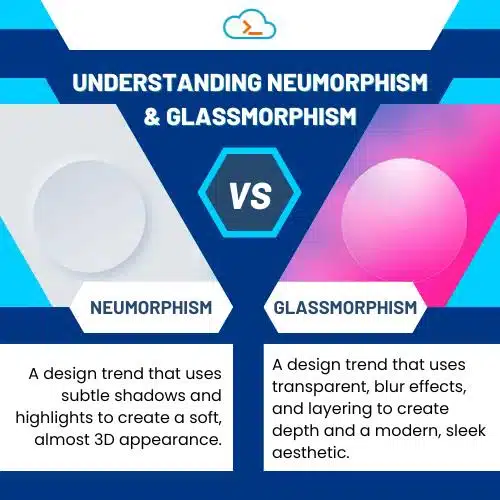
Neumorphism, a portmanteau of “new” and “skeuomorphism,” is a design trend that uses subtle shadows and highlights to create a soft, almost 3D appearance. Elements appear to be raised or embossed, giving a tactile feel.
Glassmorphism, on the other hand, mimics the look of frosted glass. It uses transparency, blur, and layering to create depth and a modern, sleek aesthetic.
For instance, agencies specialize in content marketing services that are intertwined with SEO best practices. Their strategy makes content both engaging and SEO-friendly, improving visibility and user interaction.
How These Trends Impact SEO
While visually appealing, these design trends can pose challenges and opportunities for SEO:
1. UI Design and SEO:
- Neumorphism SEO: The subtle nature of Neumorphism can sometimes lead to low contrast, affecting readability and accessibility. It can negatively impact user experience and, consequently, SEO trends.
- Glassmorphism SEO: The transparency in Glassmorphism can make text and elements difficult to read if not implemented carefully. It can also hinder accessibility and user engagement.
2. UX Impact SEO:
- Enhancing user Engagement: Both Neumorphism and Glassmorphism have the potential to enhance user engagement significantly. However, it’s crucial to ensure that usability is not compromised, as this could lead to higher bounce rates and lower dwell times, negatively impacting Google’s ranking.
- Page Experience: Google considers page experience a crucial ranking factor. Design elements that hinder navigation, readability, or mobile friendliness can hurt SEO.
3. Modern UI SEO:
- Web Design SEO: Modern UI trends should be implemented with SEO in mind. Balancing aesthetics with SEO best practices is crucial for optimal results.
- Visual SEO: While visual appeal is important, it shouldn’t overshadow technical SEO aspects like page speed, mobile-friendliness, and site structure.
4. Ranking Factors and Design Performance:
- Core Web Vitals: These metrics (Largest Contentful Paint, First Input Delay, Cumulative Layout Shift) are crucial for SEO. Design choices that negatively impact these metrics can hurt Google’s ranking.
- Page Speed: Both Neumorphism and Glassmorphism can impact page speed if not optimized. Large images, complex CSS, and excessive use of effects can slow download times.
5. SEO Best Practices and Website Aesthetics:
- SEO Optimization: The key to a successful website lies in balancing its aesthetics with SEO optimization. Design should complement, not hinder, SEO efforts.
- Mobile-Friendly: Ensuring designs are responsive and mobile-friendly is crucial for both UX and SEO, especially with Google’s mobile-first indexing.
6. Accessibility SEO:
- UI Accessibility: Both design trends can pose accessibility challenges. Ensuring sufficient contrast, clear visual hierarchy, and keyboard navigation is crucial for inclusive design and SEO.
- UX Signals: User behavior, like time on page, bounce rate, and conversion rate, sends signals to search engines. Design that improves UX can positively influence these signals.
7. Technical SEO and Design Usability:
- Site Structure: The design should complement a logical site structure. Clear website navigation and content hierarchy are crucial for both UX and SEO trends.
- Schema Markup: Implementing schema markup, which provides search engines with additional context about your content, can enhance search engine understanding of content, regardless of design trends. This can lead to improved SEO performance.
8. Content and Search Intent:
- Content Hierarchy: The design should prioritize a clear content hierarchy, ensuring that both users and search engines can easily identify and understand key information.
- Aligning with User Search Intent: Design that aligns with the user’s search intent is crucial. A design that supports the user’s goal is more likely to result in positive UX signals, thereby enhancing SEO.
Choosing the Best Digital Marketing Agency in India ensures your business gets top-notch SEO, content marketing, and performance-driven strategies for maximum online visibility.
9. Image Optimization and Interaction Design:
- Image Optimization: Optimizing images for size and format is crucial for page speed, especially with visually intensive designs like Neumorphism and Glassmorphism.
- Interaction Design: Design should facilitate seamless interaction. Clear calls to action, intuitive navigation, and smooth transitions contribute to positive UX and SEO.
10. Digital Branding and SEO Visibility
- Digital Branding: Design plays a crucial role in digital branding. A consistent and memorable design can significantly improve brand recognition and SEO visibility.
- SEO Visibility: By improving UX, page experience, and technical SEO, design can indirectly contribute to increased SEO visibility.
11. On-Page SEO and Conversion Rate:
- On-Page SEO: The design should support on-page SEO elements like title tags, meta descriptions, and header tags.
- Conversion Rate: An effective website design enhances conversion rates by seamlessly leading users toward intended actions.
12. Design Performance and Responsive Design:
- Design Performance: Optimizing design for performance is crucial. Minimizing code, optimizing images, and leveraging browser caching can improve page speed and Core Web Vitals.
- Responsive Design: Ensuring designs are responsive across all devices is crucial for both UX and SEO.
13. Keyword Ranking and Web Aesthetics:
- Keyword Ranking: While design doesn’t directly impact keyword ranking, it can influence user behavior, which indirectly affects SEO trends.
- Web Aesthetics: Balancing web aesthetics with SEO best practices is crucial for long-term success.
14. SEO-Friendly UI and Page Speed:
- SEO-Friendly UI: A UI design SEO that prioritizes usability, accessibility, and mobile-friendliness is inherent.
- Page Speed: Design choices that prioritize page speed contribute to a better user experience and improved SEO.
15. Bounce Rate and Google Ranking:
- Bounce Rate: High bounce rates can negatively impact Google’s ranking. Design that improves user engagement and encourages exploration can help reduce bounce rates.
- Google Ranking: Ultimately, a design that supports SEO best practices, improves UX, and enhances page experience can positively influence Google ranking.
Integrating advanced design trends with robust SEO strategies can be complex. Partnering with top enterprise SEO services in India can provide the expertise needed to navigate this integration effectively. These services offer comprehensive solutions, including technical SEO, content marketing, and performance optimization, ensuring that modern UI designs align with SEO goals.
Key Takeaways
- Neumorphism and Glassmorphism enhance UI but must be optimized for readability, accessibility, and page speed to support SEO performance.
- Engaging designs improve UX signals like dwell time and conversion rates, influencing search engine rankings positively.
- Ensuring mobile-friendliness, Core Web Vitals optimization, and proper content hierarchy helps integrate modern UI trends with SEO best practices.
Conclusion
Incorporating design styles such as Neumorphism and Glassmorphism can greatly improve a website’s aesthetics and overall user experience. However, it is imperative to consider their impact on SEO. By balancing innovative design with SEO best practices focusing on user engagement, accessibility, performance, and responsive design, businesses can create aesthetically pleasing websites that also perform well in search engine rankings.