
Accelerating AI Innovation: The Rapid Development of DeepSeek-R2 

Accelerating AI Innovation: The Rapid Development of DeepSeek-R2 

By Rasmita Patro

DeepSeek-R2, a one-of-a-kind AI model, is leading the way in the constantly developing field of artificial intelligence. Its unique features, such as unparalleled computational efficiency and scalable computing, distinguish it from other models. This uniqueness is a testament to our unwavering commitment to AI innovation. It’s set to redefine the boundaries of enterprise solutions, ushering in a new era of business automation and intelligent systems.

DeepSeek-R2 is not merely an incremental upgrade; it represents a monumental leap forward, a culmination of breakthrough research and scientific innovation. It’s a powerhouse designed to fuel digital transformation, empower businesses with data-driven insights, and drive unprecedented levels of operational efficiency.

DeepSeek-R2 as a Catalyst for Intelligent Enterprise

In today’s dynamic business environment, agility and adaptability are paramount. DeepSeek-R2 provides the tools necessary to navigate this complexity, acting as a catalyst for intelligent enterprise by:

  • Revolutionizing Business Automation: By leveraging smart automation, DeepSeek-R2 streamlines intricate workflows, freeing up valuable human capital for strategic endeavors. This process optimization directly translates into tangible gains in operational efficiency.
  • Empowering Decision Intelligence: In an age of information overload, the ability to extract meaningful insights is crucial. DeepSeek-R2 excels at data processing and analysis, delivering intelligent insights that empower decision intelligence. It enables businesses to make informed, data-backed decisions, mitigating risks and seizing opportunities.
  • Harnessing Predictive Analytics: DeepSeek-R2’s advanced capabilities enable businesses to leverage the power of predictive analytics. By analyzing past data and identifying patterns, it can forecast future trends and outcomes, allowing for proactive planning and resource allocation.
  • Optimizing System Performance: DeepSeek-R2’s ability to analyze and optimize complex systems leads to significant improvements in system optimization. Whether it’s optimizing supply chain logistics or enhancing customer service operations, DeepSeek-R2 delivers measurable results.

Businesses need the right technology partners to stay ahead, leverage AI-driven digital strategies, and achieve exceptional growth!

The Technological Foundation of DeepSeek-R2

The remarkable capabilities of DeepSeek-R2 are rooted in a confluence of advanced technologies and innovative techniques:

  • Computational Power and Efficiency: DeepSeek has prioritized computational efficiency in the design of DeepSeek-R2, enabling it to deliver exceptional performance while minimizing resource consumption. It is crucial for scalable computing and infrastructure scaling. The sheer computational power available to this model allows for complex calculations to be completed in record time.
  • Advanced Neural Networks and Algorithm Advancements: Built upon a foundation of sophisticated neural networks and cutting-edge algorithm advancements, DeepSeek-R2 delivers unparalleled accuracy and efficiency. The commitment to model training ensures peak performance.
  • Scalable Computing and High-Performance Computing: DeepSeek-R2 leverages the power of high-performance computing and distributed processing to handle massive workloads and complex computations. It enables the model to scale seamlessly, accommodating the growing demands of enterprise applications.
  • Cloud Computing and Edge Computing: DeepSeek-R2 is designed to operate seamlessly in both cloud computing and edge computing environments. This flexibility allows businesses to deploy the model in a way that perfectly aligns with their unique requirements and demand processing in the cloud or real-time analysis at the edge. Support for hybrid cloud solutions is available, delivering more adaptable and robust alternatives.
  • Data Science and Data Processing: DeepSeek-R2 is a powerful tool for data science, enabling businesses to extract valuable insights from their data. The model’s advanced data processing capabilities allow it to manage large and intricate datasets efficiently.
  • Optimized Workflows and Model Deployment: DeepSeek has focused on creating optimized workflows for model deployment, making it easier for businesses to integrate DeepSeek-R2 into their existing systems. This streamlined process accelerates technology adoption and minimizes disruption.

“As AI gets more efficient and accessible, we will see its use skyrocket, turning it into a commodity we just can’t get enough of.” Satya Nadella

Shaping the Future of AI and Beyond

DeepSeek-R2 is not just a powerful AI model; it’s a glimpse into the future technology that will shape our world. As AI advances, we can anticipate more cutting-edge capabilities and next-generation solutions to tackle the challenges and opportunities of the digital era.

DeepSeek-R2 embodies the emerging trends in AI, including:

  • Cognitive Computing: DeepSeek-R2’s ability to understand and process complex information aligns with cognitive computing principles. It allows the model to mimic human-like cognitive functions, allowing it to carry out tasks that involve reasoning, problem-solving, and decision-making.
  • Smart Automation: DeepSeek-R2’s capabilities drive smart automation across industries, increasing efficiency and productivity. Intelligent automation involves leveraging AI to streamline and automate tasks that traditionally demand human-like intelligence, including activities like data analysis, decision-making, and process optimization. By leveraging smart automation, DeepSeek-R2 can streamline workflows, freeing up valuable human capital for strategic endeavors.
  • Tech Disruption: DeepSeek-R2 is a catalyst for tech disruption, transforming traditional business models and creating new opportunities for innovation.
  • Cutting-edge research: DeepSeek-R2 is the product of cutting-edge research and will continue to be improved.

Performance Benchmarking

DeepSeek strongly emphasizes performance benchmarking, rigorously evaluating its models against industry standards. This commitment to excellence ensures that DeepSeek-R2 performs steadily and dependably across various types of applications.

DeepSeek-R2 empowers organizations to embrace a data-driven culture. By providing access to data-driven insights, the model empowers organizations to make informed choices using data insights facts rather than intuition. It leads to improved outcomes, reduced risks, and increased competitiveness.

Partner with the trusted technology experts to empower your business with AI-driven digital strategies, ensuring sustained growth and market leadership!

The Impact Across Industries

The transformative potential of DeepSeek-R2 will be felt across numerous industries:

  • Finance: Predictive analytics for fraud detection, risk assessment, and algorithmic trading.
  • Healthcare: Diagnostics driven by AI, tailored healthcare, and the development of new medications.
  • Manufacturing: Intelligent manufacturing, proactive maintenance, and product quality assurance.
  • Retail: Personalized recommendations, supply chain optimization, and customer service automation.
  • Logistics: Optimizing routes, forecasting demand, and managing inventory.

Bottomline

As AI progresses, we can look forward to even greater advancements and sophisticated next-gen solutions that surpass the challenges and make the most of the opportunities presented by the digital era. DeepSeek-R2’s role in driving scientific innovation and breakthrough research will play a key role in this transformation, generating enthusiasm and anticipation for the future.

Frequently Asked Questions

1. What makes DeepSeek-R2 different from other AI models?

DeepSeek-R2 stands out due to its superior computational efficiency, scalable computing, and high-performance computing capabilities. It employs deep learning models and neural networks to deliver intelligent insights for businesses.

2. How does DeepSeek-R2 enhance enterprise automation?

By integrating business automation and decision intelligence, DeepSeek-R2 streamlines workflows, improves process optimization, and enhances operational efficiency through smart automation.

3.Can DeepSeek-R2 be deployed in cloud environments?

Yes, DeepSeek-R2 supports cloud computing, hybrid cloud, and edge computing, enabling on-demand processing and infrastructure scaling for enterprises.

4. What industries benefit most from DeepSeek-R2?

DeepSeek-R2 is applicable across multiple industries, including finance, healthcare, manufacturing, and technology, where data processing, predictive analytics, and intelligent systems are crucial for growth.
Empowering Women in Technology: Strategies for Inclusive Workplaces 

Empowering Women in Technology: Strategies for Inclusive Workplaces 

By Rasmita Patro

The tech industry, a powerhouse driving global digital transformation, has long grappled with a significant challenge: the underrepresentation of women. While strides have been made, achieving true gender diversity and gender equity remains a crucial objective. Women in tech are not just a demographic; they are a vital resource with the potential to bring about significant change. Their unique perspectives, innovative solutions, and essential skills have the power to revolutionize the industry. Creating inclusive workplaces where women thrive goes beyond fairness. It’s a crucial strategy for the future of women in technology.

The Current Landscape: Challenges and Opportunities

Although women are aware of the significance of female representation, they continue to face numerous barriers in tech careers. From subtle biases to overt discrimination, the challenges are multifaceted. Bias reduction is paramount, starting with recognizing and addressing unconscious biases that influence hiring, promotion, and performance evaluations. Fair pay and equal opportunities go beyond just buzzwords; they are fundamental rights that must be upheld to ensure workplace equality.

Breaking barriers requires a concerted effort to dismantle systemic obstacles that hinder women’s career growth and advancement. It involves tackling the gender pay gap, ensuring access to skill development and women’s training, and fostering a supportive environment that encourages women’s networking.

Strategies for Building Inclusive Workplaces

Creating a truly inclusive workplace requires a multi-pronged approach that addresses both systemic and cultural factors. Here are some key strategies:

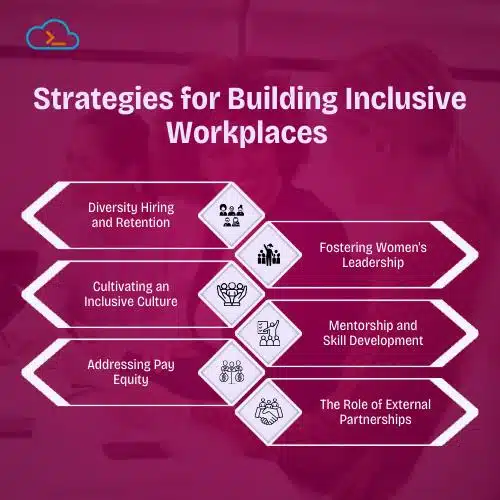
1. Diversity Hiring and Retention

  • Diversity strategies must be embedded in the hiring process from the outset. It involves actively seeking out and recruiting female engineers, coders, and developers from diverse backgrounds.
  • Implementing blind resume screening and structured interviews can help mitigate unconscious bias.
  • Partnering with organizations that support STEM women and women innovators can expand the talent pool.
  • Creating internship and apprenticeship programs specifically targeted at women can provide valuable entry points into tech careers.
  • Retention strategies are equally important. Creating an inclusive culture where women feel valued, respected, and supported is crucial for retaining top talent.

2. Fostering Women’s Leadership

  • Promoting women’s leadership is essential for creating a more equitable and inclusive tech industry.
  • Providing tech mentorship and sponsorship opportunities can empower women to build the skills and confidence required to take on leadership roles.
  • Establishing clear pathways for career advancement and succession planning can ensure that women are represented at all levels of the organization, including women executives.
  • Encouraging and supporting women founders and women entrepreneurs is also vital for driving innovation and creating new opportunities.

3. Cultivating an Inclusive Culture

  • Building an inclusive culture requires commitment from leadership at all levels.
  • Implementing comprehensive workplace policies that address issues such as harassment, discrimination, and work-life balance is essential.
  • Creating employee resource groups (ERGs) for women can create a supportive environment for networking, guidance, and advocacy.
  • Promoting open communication and feedback channels can assist in recognizing and resolving bias and discrimination concerns.
  • Celebrating the achievements of women innovators is not just a feel-good exercise; it serves as a strong platform for spreading awareness and motivating others. Women’s support systems are crucial for creating a positive environment.
Strategies for Building Inclusive Workplaces

4. Mentorship and Skill Development

  • Tech mentorship programs play a pivotal role in supporting women’s career development.
  • Pairing women with experienced mentors can provide guidance, support, and access to valuable networks.
  • Women’s training programs focused on technical skills, leadership development, and career planning can help women develop the competencies they need to succeed.
  • Investing in skill development ensures that women have the tools and knowledge to thrive in the rapidly evolving tech landscape.

5. Addressing Pay Equity

  • Achieving equal pay for equal work is a fundamental principle of workplace equality.
  • Conducting regular pay audits and implementing transparent pay policies can help identify and address pay gaps.
  • Promoting salary negotiation training for women can help them advocate for fair compensation.

6. The Role of External Partnerships

  • Collaborating with external organizations that are committed to tech inclusion can amplify efforts to promote workplace diversity.
  • Partnering with educational institutions and community organizations can help create pipelines for female representation in STEM fields.
  • Collaborating with industry organizations and advocacy groups can help drive policy changes and raise awareness of the importance of women’s empowerment.

The Future of Women in Tech: A Vision for Tomorrow

The future of women in technology is marked by transformative opportunities and a growing emphasis on diversity and inclusion. As industries embrace digital transformation, women are increasingly breaking barriers in fields like artificial intelligence, cybersecurity, and data science, while emerging areas such as robotic process automation (RPA) and extended reality (XR) offer new avenues without historical gender biases.

Despite only 28% of global tech jobs being held by women, initiatives promoting STEM education, mentorship, and workplace inclusion are inspiring the next generation. Companies are recognizing the economic benefits of diversity, with studies showing that organizations with more women in leadership roles achieve higher profitability. By fostering inclusive environments, addressing systemic biases, and celebrating female role models, the tech industry can unlock innovation and pave the way for a more equitable future.

Conclusion

Empowering women in tech is essential for a progressive and innovative industry. Businesses can create a more diverse and dynamic tech industry by fostering inclusive workplaces, ensuring workplace equality, and supporting career advancement. From diversity hiring to leadership roles, the collective effort of companies, policymakers, and individuals can shape a future where women executives, developers, and STEM women lead the way. The journey towards gender equity is ongoing, but with structured diversity strategies and unwavering commitment, we can break barriers and build a truly inclusive tech workforce.

Frequently Asked Questions

1. Why is gender diversity crucial in the tech industry?

Gender diversity in the tech industry is not just a matter of equality but a strategic advantage. Diverse teams bring varied perspectives that foster creativity, improve decision-making, and enhance innovation. It can lead to better problem-solving and improved business performance.

2. What are the best strategies to enhance women’s leadership in tech?

Encouraging women’s mentorship, providing career growth opportunities, and implementing leadership roles for women are key to fostering women executives in tech careers.

3. How can companies ensure equal pay and pay equity?

Companies can conduct regular pay audits, implement transparent pay equity policies, and offer salary negotiation training for women developers and female engineers.

4. What role does digital transformation play in empowering women in tech?

Digital transformation enables flexible work options, access to online learning, and remote job opportunities, making it easier for women in tech to balance career and personal responsibilities.

Neumorphism and Glassmorphism: Modern design trends impacting SEO 

Neumorphism and Glassmorphism: Modern design trends impacting SEO 

In the era of digital landscapes, user experience (UX) and search engine optimization (SEO) are intertwined. Modern website design trends like Neumorphism and Glassmorphism are not just about aesthetics; they significantly impact SEO by influencing user engagement, page experience, and other critical ranking factors. This blog explores how these trends can be leveraged for SEO optimization while adhering to SEO best practices.

Understanding Neumorphism and Glassmorphism

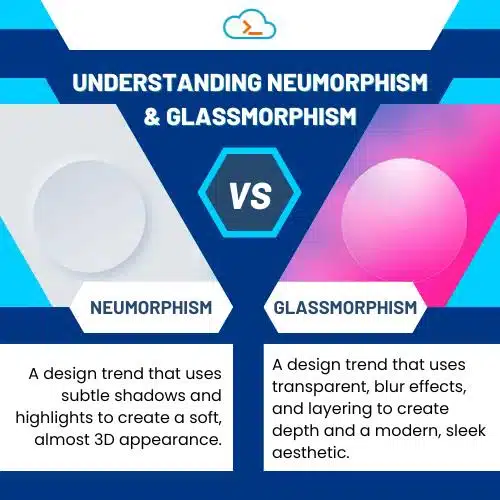
Neumorphism, a portmanteau of “new” and “skeuomorphism,” is a design trend that uses subtle shadows and highlights to create a soft, almost 3D appearance. Elements appear to be raised or embossed, giving a tactile feel.

Glassmorphism, on the other hand, mimics the look of frosted glass. It uses transparency, blur, and layering to create depth and a modern, sleek aesthetic.

For instance, agencies specialize in content marketing services that are intertwined with SEO best practices. Their strategy makes content both engaging and SEO-friendly, improving visibility and user interaction.

How These Trends Impact SEO

While visually appealing, these design trends can pose challenges and opportunities for SEO:

1. UI Design and SEO:

  • Neumorphism SEO: The subtle nature of Neumorphism can sometimes lead to low contrast, affecting readability and accessibility. It can negatively impact user experience and, consequently, SEO trends.
  • Glassmorphism SEO: The transparency in Glassmorphism can make text and elements difficult to read if not implemented carefully. It can also hinder accessibility and user engagement.

2. UX Impact SEO:

  • Enhancing user Engagement: Both Neumorphism and Glassmorphism have the potential to enhance user engagement significantly. However, it’s crucial to ensure that usability is not compromised, as this could lead to higher bounce rates and lower dwell times, negatively impacting Google’s ranking.
  • Page Experience: Google considers page experience a crucial ranking factor. Design elements that hinder navigation, readability, or mobile friendliness can hurt SEO.
Understanding Neumorphism & Glassmorphism

3. Modern UI SEO:

  • Web Design SEO: Modern UI trends should be implemented with SEO in mind. Balancing aesthetics with SEO best practices is crucial for optimal results.
  • Visual SEO: While visual appeal is important, it shouldn’t overshadow technical SEO aspects like page speed, mobile-friendliness, and site structure.

4. Ranking Factors and Design Performance:

  • Core Web Vitals: These metrics (Largest Contentful Paint, First Input Delay, Cumulative Layout Shift) are crucial for SEO. Design choices that negatively impact these metrics can hurt Google’s ranking.
  • Page Speed: Both Neumorphism and Glassmorphism can impact page speed if not optimized. Large images, complex CSS, and excessive use of effects can slow download times.

5. SEO Best Practices and Website Aesthetics:

  • SEO Optimization: The key to a successful website lies in balancing its aesthetics with SEO optimization. Design should complement, not hinder, SEO efforts.
  • Mobile-Friendly: Ensuring designs are responsive and mobile-friendly is crucial for both UX and SEO, especially with Google’s mobile-first indexing.

6. Accessibility SEO:

  • UI Accessibility: Both design trends can pose accessibility challenges. Ensuring sufficient contrast, clear visual hierarchy, and keyboard navigation is crucial for inclusive design and SEO.
  • UX Signals: User behavior, like time on page, bounce rate, and conversion rate, sends signals to search engines. Design that improves UX can positively influence these signals.

7. Technical SEO and Design Usability:

  • Site Structure: The design should complement a logical site structure. Clear website navigation and content hierarchy are crucial for both UX and SEO trends.
  • Schema Markup: Implementing schema markup, which provides search engines with additional context about your content, can enhance search engine understanding of content, regardless of design trends. This can lead to improved SEO performance.

8. Content and Search Intent:

  • Content Hierarchy: The design should prioritize a clear content hierarchy, ensuring that both users and search engines can easily identify and understand key information.
  • Aligning with User Search Intent: Design that aligns with the user’s search intent is crucial. A design that supports the user’s goal is more likely to result in positive UX signals, thereby enhancing SEO.

Choosing the Best Digital Marketing Agency in India ensures your business gets top-notch SEO, content marketing, and performance-driven strategies for maximum online visibility.

9. Image Optimization and Interaction Design:

  • Image Optimization: Optimizing images for size and format is crucial for page speed, especially with visually intensive designs like Neumorphism and Glassmorphism.
  • Interaction Design: Design should facilitate seamless interaction. Clear calls to action, intuitive navigation, and smooth transitions contribute to positive UX and SEO.

10. Digital Branding and SEO Visibility

  • Digital Branding: Design plays a crucial role in digital branding. A consistent and memorable design can significantly improve brand recognition and SEO visibility.
  • SEO Visibility: By improving UX, page experience, and technical SEO, design can indirectly contribute to increased SEO visibility.

11. On-Page SEO and Conversion Rate:

  • On-Page SEO: The design should support on-page SEO elements like title tags, meta descriptions, and header tags.
  • Conversion Rate: An effective website design enhances conversion rates by seamlessly leading users toward intended actions.

12. Design Performance and Responsive Design:

  • Design Performance: Optimizing design for performance is crucial. Minimizing code, optimizing images, and leveraging browser caching can improve page speed and Core Web Vitals.
  • Responsive Design: Ensuring designs are responsive across all devices is crucial for both UX and SEO.

13. Keyword Ranking and Web Aesthetics:

  • Keyword Ranking: While design doesn’t directly impact keyword ranking, it can influence user behavior, which indirectly affects SEO trends.
  • Web Aesthetics: Balancing web aesthetics with SEO best practices is crucial for long-term success.

14. SEO-Friendly UI and Page Speed:

  • SEO-Friendly UI: A UI design SEO that prioritizes usability, accessibility, and mobile-friendliness is inherent.
  • Page Speed: Design choices that prioritize page speed contribute to a better user experience and improved SEO.

15. Bounce Rate and Google Ranking:

  • Bounce Rate: High bounce rates can negatively impact Google’s ranking. Design that improves user engagement and encourages exploration can help reduce bounce rates.
  • Google Ranking: Ultimately, a design that supports SEO best practices, improves UX, and enhances page experience can positively influence Google ranking.

Integrating advanced design trends with robust SEO strategies can be complex. Partnering with top enterprise SEO services in India can provide the expertise needed to navigate this integration effectively. These services offer comprehensive solutions, including technical SEO, content marketing, and performance optimization, ensuring that modern UI designs align with SEO goals.

Key Takeaways

  • Neumorphism and Glassmorphism enhance UI but must be optimized for readability, accessibility, and page speed to support SEO performance.
  • Engaging designs improve UX signals like dwell time and conversion rates, influencing search engine rankings positively.
  • Ensuring mobile-friendliness, Core Web Vitals optimization, and proper content hierarchy helps integrate modern UI trends with SEO best practices.

Conclusion

Incorporating design styles such as Neumorphism and Glassmorphism can greatly improve a website’s aesthetics and overall user experience. However, it is imperative to consider their impact on SEO. By balancing innovative design with SEO best practices focusing on user engagement, accessibility, performance, and responsive design, businesses can create aesthetically pleasing websites that also perform well in search engine rankings.

Frequently Asked Questions

1. Are Neumorphism and Glassmorphism suitable for all websites?

No, these trends may not be suitable for all websites. The choice depends on the brand’s personality, target audience, and website goals. It’s crucial to consider usability, accessibility, and SEO implications before implementing these trends.

2. How can I ensure accessibility with these design trends?

To ensure accessibility with these design trends, use high contrast, clear typography, semantic HTML, and keyboard-friendly navigation, and conduct thorough accessibility testing.

3. Can these design trends negatively impact page speed?

Yes, if not implemented carefully. Optimize images, minimize code, and leverage browser caching to mitigate potential performance issues. Regularly monitor page speed and Core Web Vitals to identify and address any problems.

4. How can I balance aesthetics with SEO best practices?

Prioritize usability and accessibility. Ensure design supports content hierarchy, website navigation, and on-page SEO elements. Perform in-depth testing to detect and resolve any conflicts between design and SEO.

Dynamic Websites: Merging Personalization with Performance 

Dynamic Websites: Merging Personalization with Performance 

Today, a website isn’t just a digital brochure; it’s a dynamic, interactive platform that has the potential to revolutionize your business. The demand for custom website experiences has skyrocketed, pushing businesses to move beyond static websites and embrace the power of dynamic web development This article explores the intricacies of dynamic websites, focusing on how to achieve website personalization without compromising performance and the significant benefits this can bring to your business.

Dynamic vs Static Websites: A Fundamental Difference

Before we delve into the intricacies of personalization and performance, it is crucial to grasp the fundamental difference between dynamic and static websites. Static websites serve pre-built, unchanging pages to every visitor. While simple to host, they lack the flexibility to adapt to individual user preferences. Dynamic websites, however, create content on the fly, tailoring each user’s experience based on various factors. This dynamic content delivery enables website personalization, creating unique and engaging interactions.

Website Personalization: A Necessity in Today’s Digital Landscape

Website personalization is no longer a luxury; it is a necessity that significantly enhances user experience optimization. Users now expect websites to understand their needs and preferences and deliver relevant content and offers. These personalized web experiences, from simple name greetings to complex product recommendations based on browsing history, can enhance user engagement, drive conversions, and build customer loyalty. The time to adapt is now.

Website Performance Optimization: The Critical Factor

While personalization is vital, it is equally important to ensure that it doesn’t come at the cost of website performance. Websites that load quickly are essential for ensuring user satisfaction and improving search engine rankings. Website performance optimization, the process of minimizing loading times and ensuring a smooth, responsive user experience, is a critical aspect of dynamic web development. It involves implementing web performance best practices across various aspects of website development.

Partnering with the leading Best Social Media Marketing Agency in Hyderabad helps in promoting your dynamic website across various social media platforms. Effective social media strategies increase engagement and drive traffic.

Merging Personalization and Performance: A Balancing Act

The challenge lies in merging website personalization with website performance optimization. Dynamic content delivery, while essential for personalization, can introduce performance bottlenecks if not implemented correctly. Achieving the right balance demands thoughtful planning and precise execution.

Key Strategies for Dynamic Website Development

Key Strategies for Dynamic Website Development

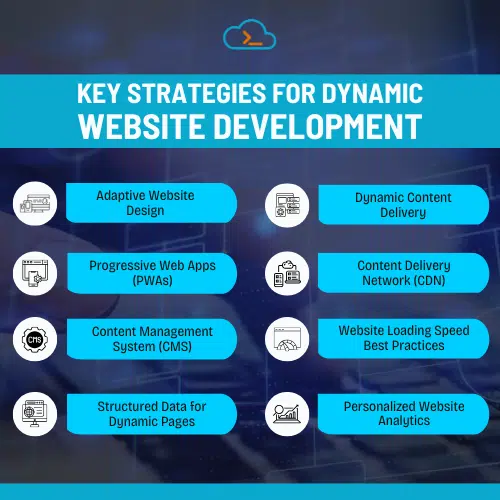
  1. Adaptive Website Design: Adaptive design ensures your website looks and functions flawlessly across different devices and screen sizes. Essential for expanding and reaching a wider audience and providing a consistent user experience.
  2. Dynamic Content Delivery: Employing efficient content delivery mechanisms is essential for delivering personalized content without delays. It might involve using server-side scripting, APIs, and databases to generate content dynamically.
  3. Progressive Web Apps (PWAs): PWAs offer a near-native app experience within a web browser. They offer fast-loading websites and offline functionality and can be added to a user’s home screen, closing the divide between websites and mobile apps.
  4. Content Delivery Network (CDN): A CDN is a network of servers distributed geographically. It caches website content, delivering it to users from the closest server, reducing latency and improving loading times.
  5. Content Management System (CMS): Selecting the right CMS is a vital decision in managing dynamic content effectively. A robust CMS for dynamic websites should offer features for creating, editing, and publishing personalized content without impacting performance. This choice requires careful consideration and research.
  6. Website Loading Speed Best Practices: Implementing website loading speed best practices is crucial. It includes optimizing images, minifying CSS and JavaScript files, leveraging browser caching, and reducing HTTP requests.
  7. Structured Data for Dynamic Pages: Using structured data markup helps search engines understand the content on your dynamic pages, improving SEO for dynamic content and visibility in search results.
  8. Personalized Website Analytics: Tracking user behavior on personalized websites is essential for understanding the effectiveness of your personalization strategies. Personalized website analytics provide insights into how users interact with dynamic content, allowing you to refine your approach.

Choosing the Best Digital Marketing Services in Hyderabad ensures that your dynamic website is optimized for performance, personalization, and SEO. Expert digital marketers help in enhancing your online presence and driving traffic to your site.

Dynamic Website SEO Strategies

SEO for dynamic content requires a different approach compared to static websites. Search engines need to crawl effectively and index dynamic pages effectively. Key SEO for dynamic content strategies include:

  • URL Parameter Handling: Using clean and descriptive URL parameters helps search engines understand the different versions of dynamic pages.
  • Canonicalization: Specifying canonical URLs for dynamic pages prevents duplicate content issues.
  • Sitemap Optimization: Creating XML sitemaps that include dynamic pages ensures search engines can discover and index them.

Website Loading Speed Best Practices: Website loading speed is a crucial ranking factor. Optimizing the loading speed of dynamic pages is essential for SEO success.

The Importance of Professional Digital Marketing Services

The importance of partnering with a professional digital marketing agency cannot be overstated. A trusted agency can assist you in creating and deploying successful digital marketing strategies such as SEO, social media marketing, and content marketing. Reliable Content Marketing Services plays a vital role in creating and distributing valuable content for your dynamic website. Quality content attracts, engages, and retains visitors, boosting your online presence. With the right support, your dynamic website can thrive in the competitive digital world.

Key Takeaways

  • Personalized user experiences enhance engagement and loyalty, making dynamic websites crucial for boosting conversions.
  • Balancing website personalization with speed is essential for smooth user experiences. Implementing CDNs, PWAs, and structured data ensures both performance and SEO rankings are maintained.
  • A well-optimized website requires expert digital marketing strategies like SEO, content marketing, and social media to reach the right audience effectively.

Conclusion

Dynamic websites are the future of online interactions, offering personalized and high-performance experiences. By implementing web performance best practices and dynamic content strategies, businesses can achieve better engagement and higher conversions. Collaborating with the Best Digital Marketing Services in Hyderabad, the Best Social Media Marketing Agency in Hyderabad, and expert Content Marketing Services ensures that your dynamic website excels in the competitive digital world.

Frequently Asked Questions

1. What distinguishes dynamic websites from static websites?

Dynamic websites provide personalized content and interactivity, while static websites present identical content to every visitor.

2. How does personalization enhance user experience?

Personalization offers tailored content, improving user engagement, satisfaction, and conversion rates.

3. What are key performance optimization techniques for dynamic websites?

Techniques include using a CDN, optimizing images, minimizing server response times, and leveraging caching.

4. Why is SEO crucial for dynamic websites?

SEO ensures that dynamic content is easily discoverable by search engines, improving site visibility and driving organic traffic.

Search Beyond Keywords: AI-Powered Intent Targeting In SEO 

Search Beyond Keywords: AI-Powered Intent Targeting In SEO 

In the search engine optimization (SEO) world, relying solely on relevant keywords is no longer enough. The advent of AI-powered tools and advancements in search technology has introduced a game-changing concept: targeting user intent beyond traditional keyword research. As search engines advance in sophistication, gaining insights into user behavior, leveraging semantic search, and optimizing for search intent are now critical components of modern SEO techniques.

What Is Search Intent And Why Is It Important?

Search intent refers to the purpose behind a search query. It is the driving force behind user inputs and is often categorized into three main types:

  • Informational Intent: Users with informational intent are seeking knowledge or answers to specific questions. For instance, a search query like “What is the capital of France?” has a clear Learning intent.
  • Navigational Intent: Users with navigational intent are looking for a specific website or web page. For example, a search query for “Facebook login page” indicates access intent.
  • Transactional Intent: Users with purchase intent are ready to make a purchase or complete a specific action. A search query like “Buy iPhone 14” demonstrates purchase intent.

Targeting user search objectives helps businesses deliver applicable content that aligns with what users are looking for. This not only improves user participation but also boosts search rankings and drives organic traffic to your site. Content Marketing Services have embraced these advancements to provide more targeted campaigns that align with evolving search algorithms and user inclinations.

The Role of AI in Understanding User Intent

AI-driven tools and AI search engines have revolutionized the way SEO professionals interpret user intent. Leveraging machine learning, AI evaluates and interprets user actions and user preferences to understand the context behind queries. By leveraging AI models, marketers can:

  • Identify patterns in search queries.
  • Predict future trends in user involvement.
  • Align content creation efforts with evolving seo trends.

For example, AI-powered intent targeting in SEO enables the identification of long tail keywords that better reflect user intent, ensuring content addresses specific needs rather than generic topics.

Semantic Search: The Heart of AI-Powered SEO

Semantic search results go beyond matching specific keywords to understanding the meaning and relationships behind them. Search engines powered by AI focus on delivering relevant content by analyzing:

  • Context: How a term fits into the broader search query.
  • Synonyms: Variations of relevant keywords that users might search for.
  • User behavior: Historical patterns that indicate user inclinations.

For instance, a query like “best smartphone for photography” doesn’t just demand keyword matches; it requires identifying content that aligns with research intent and reviews that guide purchasing decisions.

Optimizing Content for AI-Powered Search Engines

Optimizing Content for AI-Powered Search Engines

Businesses must prioritize content creation strategies that effectively address query intent to adapt to AI-enhanced search engines. Here’s how:

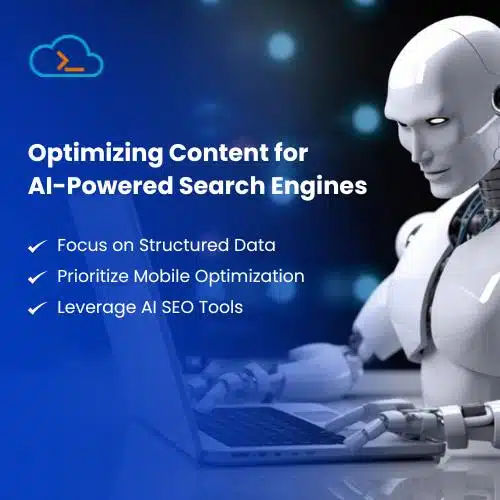
  • Focus on Structured Data: Incorporating metadata into your website enables search engines to interpret your content more effectively. Rich snippets, FAQs, and metadata like meta tags enhance visibility and improve search results presentation.
  • Prioritize Mobile Optimization: With mobile devices’ growing dominance, ensuring your site is mobile-friendly is non-negotiable. Mobile compatibility enhances user involvement and aligns with modern search technology standards.
  • Leverage AI SEO Tools: Using AI SEO tools can significantly enhance your ability to target user intent. These tools provide insights into:
    • Keyword relevance and keyword density.
    • Content gaps based on AI-powered analysis.
    • Competitor strategies for engine optimization.
  • Optimize for Voice Search: As voice search gains traction, adapting your content to natural language queries becomes crucial. Focus on conversational tones and questions users might ask through voice assistants.
  • Create Content That Matches Intent: Whether addressing informational intent, access intent, or acquisition intent, your content should align with the needs of your primary audience. For instance:
    • Blog posts for informational intent.
    • Landing pages for acquisition intent.
    • Navigational aids for users seeking a particular website.

Collaborating with the Best Enterprise SEO Agency in India ensures you leverage advanced AI capabilities for optimal search visibility and audience targeting.

The Future of AI-Based Intent Targeting in SEO

AI-driven search optimization is continually evolving. Businesses must keep up with the latest seo developments to stay competitive. This involves:

  1. Monitoring user behavior and preferences to anticipate changes in search intent.
  2. Using advanced AI tools for real-time data analysis and strategy adjustments.
  3. Incorporating machine learning insights to refine seo campaigns and improve organic traffic.

Key Benefits of AI-Based Intent Targeting

Incorporating search intent targeting into your SEO methods requires a data-driven approach and expertise in content creation. Our team of experienced content marketing specialists can help you create high-quality, informative content that connects with your target audience and matches search intent. We can help you craft a comprehensive content strategy that encaplsulates every aspect of SEO, including keyword research, content optimization, and promotion. By focusing on search beyond keywords, businesses can enjoy several advantages:

  • Enhanced search visibility by delivering relevant content.
  • Increased user participation through personalized seo plans.
  • Improved search results precision, attracting the right target audience.
  • Meaningful interactions and user queries drive higher organic traffic.

If you’re looking for the Best Digital Marketing Agency in India, choose one that integrates AI tools to refine SEO campaigns, ensuring you stay ahead in a competitive landscape.

Conclusion

Redefining SEO Strategies with AI-powered Intent Targeting Beyond Keywords represents a significant shift in how businesses approach engine optimization. By understanding user search intent, embracing semantic search, and utilizing advanced AI-enhanced tools, companies can create impactful SEO strategies. Whether it’s optimizing for voice search, refining content generation, or leveraging metadata, the future of SEO lies in adapting to AI search engines and focusing on user involvement.

By syncing your digital marketing strategies with these advancements, you can not only meet the expectations of modern users but also stay ahead in an increasingly competitive landscape.

Frequently Asked Questions

1. What is AI-based intent targeting in SEO?

AI-based intent targeting in SEO uses artificial intelligence to interpret user intent and more effectively provide content that aligns with their search query needs.

2. How does semantic search improve search optimization?

Semantic search improves search optimization by emphasizing the context and connections between words, resulting in more precise and relevant search outcomes.

3. Why is mobile UX optimization important for SEO?

Mobile UX optimization ensures your site is accessible and user-friendly on mobile devices, boosting user engagement and improving search visibility.

4. What advantages do AI SEO tools offer?

AI SEO tools provide insights into keyword research, content gaps, and competitor strategies, enabling businesses to optimize their SEO efforts more efficiently.

We use cookies to ensure that we give you the best experience on our website. If you continue to use this site we will assume that you are happy with it.

Cookies settings
Accept
Privacy & Cookie policy
Privacy & Cookies policy
Cookie name Active

Privacy Policy

What information do we collect?

We collect information from you when you register on our site or place an order. When ordering or registering on our site, as appropriate, you may be asked to enter your: name, e-mail address or mailing address.

What do we use your information for?

Any of the information we collect from you may be used in one of the following ways: To personalize your experience (your information helps us to better respond to your individual needs) To improve our website (we continually strive to improve our website offerings based on the information and feedback we receive from you) To improve customer service (your information helps us to more effectively respond to your customer service requests and support needs) To process transactions Your information, whether public or private, will not be sold, exchanged, transferred, or given to any other company for any reason whatsoever, without your consent, other than for the express purpose of delivering the purchased product or service requested. To administer a contest, promotion, survey or other site feature To send periodic emails The email address you provide for order processing, will only be used to send you information and updates pertaining to your order.

How do we protect your information?

We implement a variety of security measures to maintain the safety of your personal information when you place an order or enter, submit, or access your personal information. We offer the use of a secure server. All supplied sensitive/credit information is transmitted via Secure Socket Layer (SSL) technology and then encrypted into our Payment gateway providers database only to be accessible by those authorized with special access rights to such systems, and are required to?keep the information confidential. After a transaction, your private information (credit cards, social security numbers, financials, etc.) will not be kept on file for more than 60 days.

Do we use cookies?

Yes (Cookies are small files that a site or its service provider transfers to your computers hard drive through your Web browser (if you allow) that enables the sites or service providers systems to recognize your browser and capture and remember certain information We use cookies to help us remember and process the items in your shopping cart, understand and save your preferences for future visits, keep track of advertisements and compile aggregate data about site traffic and site interaction so that we can offer better site experiences and tools in the future. We may contract with third-party service providers to assist us in better understanding our site visitors. These service providers are not permitted to use the information collected on our behalf except to help us conduct and improve our business. If you prefer, you can choose to have your computer warn you each time a cookie is being sent, or you can choose to turn off all cookies via your browser settings. Like most websites, if you turn your cookies off, some of our services may not function properly. However, you can still place orders by contacting customer service. Google Analytics We use Google Analytics on our sites for anonymous reporting of site usage and for advertising on the site. If you would like to opt-out of Google Analytics monitoring your behaviour on our sites please use this link (https://tools.google.com/dlpage/gaoptout/)

Do we disclose any information to outside parties?

We do not sell, trade, or otherwise transfer to outside parties your personally identifiable information. This does not include trusted third parties who assist us in operating our website, conducting our business, or servicing you, so long as those parties agree to keep this information confidential. We may also release your information when we believe release is appropriate to comply with the law, enforce our site policies, or protect ours or others rights, property, or safety. However, non-personally identifiable visitor information may be provided to other parties for marketing, advertising, or other uses.

Registration

The minimum information we need to register you is your name, email address and a password. We will ask you more questions for different services, including sales promotions. Unless we say otherwise, you have to answer all the registration questions. We may also ask some other, voluntary questions during registration for certain services (for example, professional networks) so we can gain a clearer understanding of who you are. This also allows us to personalise services for you. To assist us in our marketing, in addition to the data that you provide to us if you register, we may also obtain data from trusted third parties to help us understand what you might be interested in. This ‘profiling’ information is produced from a variety of sources, including publicly available data (such as the electoral roll) or from sources such as surveys and polls where you have given your permission for your data to be shared. You can choose not to have such data shared with the Guardian from these sources by logging into your account and changing the settings in the privacy section. After you have registered, and with your permission, we may send you emails we think may interest you. Newsletters may be personalised based on what you have been reading on theguardian.com. At any time you can decide not to receive these emails and will be able to ‘unsubscribe’. Logging in using social networking credentials If you log-in to our sites using a Facebook log-in, you are granting permission to Facebook to share your user details with us. This will include your name, email address, date of birth and location which will then be used to form a Guardian identity. You can also use your picture from Facebook as part of your profile. This will also allow us and Facebook to share your, networks, user ID and any other information you choose to share according to your Facebook account settings. If you remove the Guardian app from your Facebook settings, we will no longer have access to this information. If you log-in to our sites using a Google log-in, you grant permission to Google to share your user details with us. This will include your name, email address, date of birth, sex and location which we will then use to form a Guardian identity. You may use your picture from Google as part of your profile. This also allows us to share your networks, user ID and any other information you choose to share according to your Google account settings. If you remove the Guardian from your Google settings, we will no longer have access to this information. If you log-in to our sites using a twitter log-in, we receive your avatar (the small picture that appears next to your tweets) and twitter username.

Children’s Online Privacy Protection Act Compliance

We are in compliance with the requirements of COPPA (Childrens Online Privacy Protection Act), we do not collect any information from anyone under 13 years of age. Our website, products and services are all directed to people who are at least 13 years old or older.

Updating your personal information

We offer a ‘My details’ page (also known as Dashboard), where you can update your personal information at any time, and change your marketing preferences. You can get to this page from most pages on the site – simply click on the ‘My details’ link at the top of the screen when you are signed in.

Online Privacy Policy Only

This online privacy policy applies only to information collected through our website and not to information collected offline.

Your Consent

By using our site, you consent to our privacy policy.

Changes to our Privacy Policy

If we decide to change our privacy policy, we will post those changes on this page.
Save settings
Cookies settings