
Dynamic Websites: Merging Personalization with Performance 

Dynamic Websites: Merging Personalization with Performance 

Today, a website isn’t just a digital brochure; it’s a dynamic, interactive platform that has the potential to revolutionize your business. The demand for custom website experiences has skyrocketed, pushing businesses to move beyond static websites and embrace the power of dynamic web development This article explores the intricacies of dynamic websites, focusing on how to achieve website personalization without compromising performance and the significant benefits this can bring to your business.

Dynamic vs Static Websites: A Fundamental Difference

Before we delve into the intricacies of personalization and performance, it is crucial to grasp the fundamental difference between dynamic and static websites. Static websites serve pre-built, unchanging pages to every visitor. While simple to host, they lack the flexibility to adapt to individual user preferences. Dynamic websites, however, create content on the fly, tailoring each user’s experience based on various factors. This dynamic content delivery enables website personalization, creating unique and engaging interactions.

Website Personalization: A Necessity in Today’s Digital Landscape

Website personalization is no longer a luxury; it is a necessity that significantly enhances user experience optimization. Users now expect websites to understand their needs and preferences and deliver relevant content and offers. These personalized web experiences, from simple name greetings to complex product recommendations based on browsing history, can enhance user engagement, drive conversions, and build customer loyalty. The time to adapt is now.

Website Performance Optimization: The Critical Factor

While personalization is vital, it is equally important to ensure that it doesn’t come at the cost of website performance. Websites that load quickly are essential for ensuring user satisfaction and improving search engine rankings. Website performance optimization, the process of minimizing loading times and ensuring a smooth, responsive user experience, is a critical aspect of dynamic web development. It involves implementing web performance best practices across various aspects of website development.

Partnering with the leading Best Social Media Marketing Agency in Hyderabad helps in promoting your dynamic website across various social media platforms. Effective social media strategies increase engagement and drive traffic.

Merging Personalization and Performance: A Balancing Act

The challenge lies in merging website personalization with website performance optimization. Dynamic content delivery, while essential for personalization, can introduce performance bottlenecks if not implemented correctly. Achieving the right balance demands thoughtful planning and precise execution.
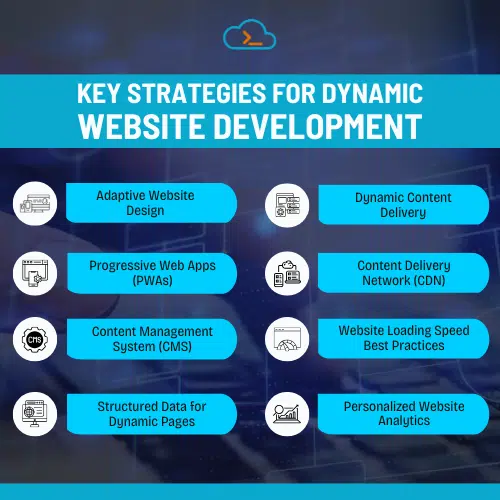
Key Strategies for Dynamic Website Development

Key Strategies for Dynamic Website Development

  1. Adaptive Website Design: Adaptive design ensures your website looks and functions flawlessly across different devices and screen sizes. Essential for expanding and reaching a wider audience and providing a consistent user experience.
  2. Dynamic Content Delivery: Employing efficient content delivery mechanisms is essential for delivering personalized content without delays. It might involve using server-side scripting, APIs, and databases to generate content dynamically.
  3. Progressive Web Apps (PWAs): PWAs offer a near-native app experience within a web browser. They offer fast-loading websites and offline functionality and can be added to a user’s home screen, closing the divide between websites and mobile apps.
  4. Content Delivery Network (CDN): A CDN is a network of servers distributed geographically. It caches website content, delivering it to users from the closest server, reducing latency and improving loading times.
  5. Content Management System (CMS): Selecting the right CMS is a vital decision in managing dynamic content effectively. A robust CMS for dynamic websites should offer features for creating, editing, and publishing personalized content without impacting performance. This choice requires careful consideration and research.
  6. Website Loading Speed Best Practices: Implementing website loading speed best practices is crucial. It includes optimizing images, minifying CSS and JavaScript files, leveraging browser caching, and reducing HTTP requests.
  7. Structured Data for Dynamic Pages: Using structured data markup helps search engines understand the content on your dynamic pages, improving SEO for dynamic content and visibility in search results.
  8. Personalized Website Analytics: Tracking user behavior on personalized websites is essential for understanding the effectiveness of your personalization strategies. Personalized website analytics provide insights into how users interact with dynamic content, allowing you to refine your approach.

Choosing the Best Digital Marketing Services in Hyderabad ensures that your dynamic website is optimized for performance, personalization, and SEO. Expert digital marketers help in enhancing your online presence and driving traffic to your site.

Dynamic Website SEO Strategies

SEO for dynamic content requires a different approach compared to static websites. Search engines need to crawl effectively and index dynamic pages effectively. Key SEO for dynamic content strategies include:

  • URL Parameter Handling: Using clean and descriptive URL parameters helps search engines understand the different versions of dynamic pages.
  • Canonicalization: Specifying canonical URLs for dynamic pages prevents duplicate content issues.
  • Sitemap Optimization: Creating XML sitemaps that include dynamic pages ensures search engines can discover and index them.

Website Loading Speed Best Practices: Website loading speed is a crucial ranking factor. Optimizing the loading speed of dynamic pages is essential for SEO success.

The Importance of Professional Digital Marketing Services

The importance of partnering with a professional digital marketing agency cannot be overstated. A trusted agency can assist you in creating and deploying successful digital marketing strategies such as SEO, social media marketing, and content marketing. Reliable Content Marketing Services plays a vital role in creating and distributing valuable content for your dynamic website. Quality content attracts, engages, and retains visitors, boosting your online presence. With the right support, your dynamic website can thrive in the competitive digital world.

Key Takeaways

  • Personalized user experiences enhance engagement and loyalty, making dynamic websites crucial for boosting conversions.
  • Balancing website personalization with speed is essential for smooth user experiences. Implementing CDNs, PWAs, and structured data ensures both performance and SEO rankings are maintained.
  • A well-optimized website requires expert digital marketing strategies like SEO, content marketing, and social media to reach the right audience effectively.

Conclusion

Dynamic websites are the future of online interactions, offering personalized and high-performance experiences. By implementing web performance best practices and dynamic content strategies, businesses can achieve better engagement and higher conversions. Collaborating with the Best Digital Marketing Services in Hyderabad, the Best Social Media Marketing Agency in Hyderabad, and expert Content Marketing Services ensures that your dynamic website excels in the competitive digital world.

Frequently Asked Questions

1. What distinguishes dynamic websites from static websites?

Dynamic websites provide personalized content and interactivity, while static websites present identical content to every visitor.

2. How does personalization enhance user experience?

Personalization offers tailored content, improving user engagement, satisfaction, and conversion rates.

3. What are key performance optimization techniques for dynamic websites?

Techniques include using a CDN, optimizing images, minimizing server response times, and leveraging caching.

4. Why is SEO crucial for dynamic websites?

SEO ensures that dynamic content is easily discoverable by search engines, improving site visibility and driving organic traffic.
Search Beyond Keywords: AI-Powered Intent Targeting In SEO 

Search Beyond Keywords: AI-Powered Intent Targeting In SEO 

In the search engine optimization (SEO) world, relying solely on relevant keywords is no longer enough. The advent of AI-powered tools and advancements in search technology has introduced a game-changing concept: targeting user intent beyond traditional keyword research. As search engines advance in sophistication, gaining insights into user behavior, leveraging semantic search, and optimizing for search intent are now critical components of modern SEO techniques.

What Is Search Intent And Why Is It Important?

Search intent refers to the purpose behind a search query. It is the driving force behind user inputs and is often categorized into three main types:

  • Informational Intent: Users with informational intent are seeking knowledge or answers to specific questions. For instance, a search query like “What is the capital of France?” has a clear Learning intent.
  • Navigational Intent: Users with navigational intent are looking for a specific website or web page. For example, a search query for “Facebook login page” indicates access intent.
  • Transactional Intent: Users with purchase intent are ready to make a purchase or complete a specific action. A search query like “Buy iPhone 14” demonstrates purchase intent.

Targeting user search objectives helps businesses deliver applicable content that aligns with what users are looking for. This not only improves user participation but also boosts search rankings and drives organic traffic to your site. Content Marketing Services have embraced these advancements to provide more targeted campaigns that align with evolving search algorithms and user inclinations.

The Role of AI in Understanding User Intent

AI-driven tools and AI search engines have revolutionized the way SEO professionals interpret user intent. Leveraging machine learning, AI evaluates and interprets user actions and user preferences to understand the context behind queries. By leveraging AI models, marketers can:

  • Identify patterns in search queries.
  • Predict future trends in user involvement.
  • Align content creation efforts with evolving seo trends.

For example, AI-powered intent targeting in SEO enables the identification of long tail keywords that better reflect user intent, ensuring content addresses specific needs rather than generic topics.

Semantic Search: The Heart of AI-Powered SEO

Semantic search results go beyond matching specific keywords to understanding the meaning and relationships behind them. Search engines powered by AI focus on delivering relevant content by analyzing:

  • Context: How a term fits into the broader search query.
  • Synonyms: Variations of relevant keywords that users might search for.
  • User behavior: Historical patterns that indicate user inclinations.

For instance, a query like “best smartphone for photography” doesn’t just demand keyword matches; it requires identifying content that aligns with research intent and reviews that guide purchasing decisions.

Optimizing Content for AI-Powered Search Engines

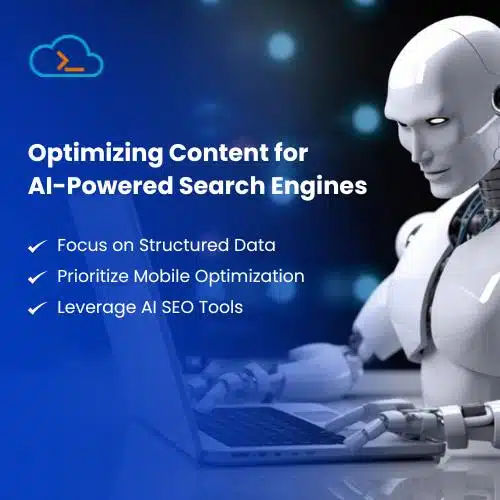
Optimizing Content for AI-Powered Search Engines

Businesses must prioritize content creation strategies that effectively address query intent to adapt to AI-enhanced search engines. Here’s how:

  • Focus on Structured Data: Incorporating metadata into your website enables search engines to interpret your content more effectively. Rich snippets, FAQs, and metadata like meta tags enhance visibility and improve search results presentation.
  • Prioritize Mobile Optimization: With mobile devices’ growing dominance, ensuring your site is mobile-friendly is non-negotiable. Mobile compatibility enhances user involvement and aligns with modern search technology standards.
  • Leverage AI SEO Tools: Using AI SEO tools can significantly enhance your ability to target user intent. These tools provide insights into:
    • Keyword relevance and keyword density.
    • Content gaps based on AI-powered analysis.
    • Competitor strategies for engine optimization.
  • Optimize for Voice Search: As voice search gains traction, adapting your content to natural language queries becomes crucial. Focus on conversational tones and questions users might ask through voice assistants.
  • Create Content That Matches Intent: Whether addressing informational intent, access intent, or acquisition intent, your content should align with the needs of your primary audience. For instance:
    • Blog posts for informational intent.
    • Landing pages for acquisition intent.
    • Navigational aids for users seeking a particular website.

Collaborating with the Best Enterprise SEO Agency in India ensures you leverage advanced AI capabilities for optimal search visibility and audience targeting.

The Future of AI-Based Intent Targeting in SEO

AI-driven search optimization is continually evolving. Businesses must keep up with the latest seo developments to stay competitive. This involves:

  1. Monitoring user behavior and preferences to anticipate changes in search intent.
  2. Using advanced AI tools for real-time data analysis and strategy adjustments.
  3. Incorporating machine learning insights to refine seo campaigns and improve organic traffic.

Key Benefits of AI-Based Intent Targeting

Incorporating search intent targeting into your SEO methods requires a data-driven approach and expertise in content creation. Our team of experienced content marketing specialists can help you create high-quality, informative content that connects with your target audience and matches search intent. We can help you craft a comprehensive content strategy that encaplsulates every aspect of SEO, including keyword research, content optimization, and promotion. By focusing on search beyond keywords, businesses can enjoy several advantages:

  • Enhanced search visibility by delivering relevant content.
  • Increased user participation through personalized seo plans.
  • Improved search results precision, attracting the right target audience.
  • Meaningful interactions and user queries drive higher organic traffic.

If you’re looking for the Best Digital Marketing Agency in India, choose one that integrates AI tools to refine SEO campaigns, ensuring you stay ahead in a competitive landscape.

Conclusion

Redefining SEO Strategies with AI-powered Intent Targeting Beyond Keywords represents a significant shift in how businesses approach engine optimization. By understanding user search intent, embracing semantic search, and utilizing advanced AI-enhanced tools, companies can create impactful SEO strategies. Whether it’s optimizing for voice search, refining content generation, or leveraging metadata, the future of SEO lies in adapting to AI search engines and focusing on user involvement.

By syncing your digital marketing strategies with these advancements, you can not only meet the expectations of modern users but also stay ahead in an increasingly competitive landscape.

Frequently Asked Questions

1. What is AI-based intent targeting in SEO?

AI-based intent targeting in SEO uses artificial intelligence to interpret user intent and more effectively provide content that aligns with their search query needs.

2. How does semantic search improve search optimization?

Semantic search improves search optimization by emphasizing the context and connections between words, resulting in more precise and relevant search outcomes.

3. Why is mobile UX optimization important for SEO?

Mobile UX optimization ensures your site is accessible and user-friendly on mobile devices, boosting user engagement and improving search visibility.

4. What advantages do AI SEO tools offer?

AI SEO tools provide insights into keyword research, content gaps, and competitor strategies, enabling businesses to optimize their SEO efforts more efficiently.
How Heatmaps Can Transform Your Digital Marketing Strategy 

How Heatmaps Can Transform Your Digital Marketing Strategy 

In today’s competitive digital landscape, businesses must leverage the power of data-driven insights to elevate their online marketing efforts and stay ahead. One powerful tool that can significantly elevate your approach and put you in control is the heatmap. Heatmaps are graphical depictions that track and analyze user behavior, offering critical findings into how users engage with your website and digital content. This article delves into how heatmaps work, how they can optimize your digital marketing efforts, and how they provide actionable data to improve your user experience and conversion metrics.

Understanding Heatmap

With a heatmap, you gain a powerful tool that empowers you to understand and control user behavior on your webpage. It uses color gradients to depict the areas of a page that receive the most attention from visitors. By analyzing these heatmaps, you can identify which parts of a page are most engaging and which areas are being ignored, giving you the control to make strategic adjustments and the confidence to steer your digital marketing strategy.

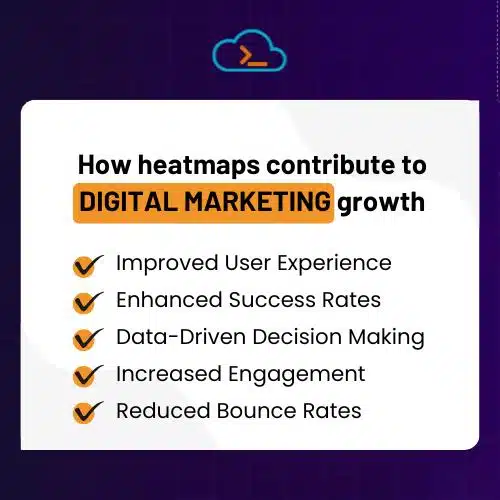
Here’s how heatmaps contribute to digital marketing growth, giving you a strategic advantage that can outpace your competition and keep you ahead in the fast-evolving digital environment:

  • Improved User Experience: By understanding how users respond to your website, you can identify areas of friction and confusion. It allows you to optimize the user interface (UI) and user experience (UX), making your website more user-friendly and intuitive interface.
  • Enhanced Success Rates: Heatmaps reveal which elements of your entry pages, product pages, and purpose pages are most effective in driving conversions. By optimizing these elements based on heatmap data, you can significantly increase success rates.
  • Data-Driven Decision Making: Heatmap data provides actionable data that can inform key decisions related to website design, content placement, and overall digital marketing strategy.
  • Increased Engagement: By understanding which parts of your website capture user attention, you can optimize content placement, ensuring that key messages and calls to action are effectively communicated to your target market.
  • Reduced Bounce Rates: By identifying areas of user frustration and improving the overall UX, heatmaps can help reduce exit rates and keep visitors engaged on your website.

We have expertise in providing tailored Digital Marketing Services that enhance brand presence and deliver measurable results across various online platforms.

How heatmaps contribute to digital marketing growth

Types of Heatmaps

There are several types of heatmaps providing different types of gain insights into user action. These include:

  • Click Maps: These heatmaps are visual representations where users click on a webpage, highlighting the most popular areas of interaction. By tracking user engagement, businesses can determine which areas are getting attention and which are being ignored, allowing them to adjust their layout and content strategically.
  • Scroll Maps: Scroll maps show how far down a webpage visitors scroll. This heatmap style is especially useful for understanding whether critical content or calls-to-action are being viewed. By analyzing scroll patterns, you can optimize page design to ensure that essential information is accessible without requiring excessive scrolling.
  • Attention HeatMaps: These heatmaps track where users spend the most time on a webpage. Attention heatmaps give marketers an indication of what content or page elements are drawing the most attention, helping you prioritize the most engaging sections of your website.
  • Movement Maps: Mouse movement heatmaps track the mouse movements of users on a page. While not always as accurate as click maps, they provide additional insights into where users’ attention is focused, even if they don’t click on specific elements.

By analyzing click maps and scroll maps, businesses can acquire knowledge of how visitors interact with their websites, especially on mobile devices. Understanding these behaviors allows companies to make informed decisions about optimizing their site for better user activity and conversion rates.

Enhance your online presence and reach your business objectives by collaborating with the Best Digital Marketing Agency in India, which is dedicated to driving growth.

Using Heatmaps to Evaluate Digital Strategy

Heatmaps are only valuable when used to evaluate and adjust your digital strategy. Here are some key steps to leverage heatmaps for better decision-making:

  • Set Clear Goals: Before using heatmaps, it’s crucial to define what you want to achieve with your digital advertising efforts. Whether it’s increasing conversion metrics, improving user experience, or optimizing content, setting clear and focused goals is the first step to leveraging heatmaps effectively and ensuring your digital marketing efforts are purposeful and directed.
  • Identify Key Pages to Track: Focus on analyzing pages that have a direct impact on your performance ratio, such as target pages, product pages, and checkout pages. Understanding how users interact with these pages can help identify opportunities for improvement.
  • Analyze Heatmap Data and Identify Trends: Once you have gathered activity mapping data, take time to analyze it and look for patterns. For example, if visitors are clicking on non-interactive elements, it may be time to reconsider your page layout. If users are scrolling past crucial content like call-to-action buttons or product descriptions, consider repositioning these key elements higher up on the page.
  • Make Data-Driven Changes: After identifying the issues, implement the necessary changes to your website using the insights gained from the heatmap. Continue monitoring heatmaps and other data analysis tools to refine your digital plan and improve your website’s performance.
  • Continuously Monitor and Optimize: Activity mapping data is not a one-time insight; it should be regularly monitored to track how changes are impacting user behavior. Regular analysis of heatmaps ensures your website is continuously optimized for the best user experience and performance, ensuring you stay ahead in the rival digital world.

Partner with the Best Enterprise SEO agency in India to achieve unparalleled growth in your digital strategy.

Conclusion

Heatmaps are a powerful tool for transforming your digital marketing strategy. By offering visual tools to track user behavior, including where visitors click, scroll, and interact, heatmaps provide actionable insights that can improve your web page performance and conversion metrics. Whether you’re optimizing landing pages, understanding the user journey, or enhancing UX, heatmaps offer valuable insights to help marketers make data-driven decisions.

Frequently Asked Questions

1. How do heatmaps help improve conversion rates?

Heatmaps help improve conversion rates by revealing user behavior patterns, allowing businesses to optimize page design and content arrangement to better align with visitor preferences.

2. Are heatmaps useful for mobile websites?

Yes, heatmaps are highly useful for mobile websites as they provide insights into how users interact with smaller screens, helping optimize design and user experience.

3. Can I use heatmaps to analyze user behavior on home pages?

Yes, heatmaps can be used to analyze user behavior on home pages by showing which areas attract the most attention and engagement from visitors.

4. How do I choose the right heatmap tool for my business?

To choose the right heatmap tool for your business, consider factors like Intuitiveness, integration with your website analytics tools, and the specific features you need, such as click tracking or scroll depth analysis.

Retention Metrics That Matter: How To Measure Success In 2025 

Retention Metrics That Matter: How To Measure Success In 2025 

Customer retention is fundamental to achieving long-term business growth. In 2025, as competition intensifies and customer expectations evolve, understanding and leveraging the right retention rate metrics will be critical to achieving business objectives. This comprehensive guide will explore the key retention metrics that matter, how to measure success, and strategies to optimize customer retention initiatives effectively.

Understanding customer retention

Customer retention refers to a business’s capacity to maintain its existing customer base over a defined timeframe. Loyal customers are more likely to make reorders, increase average purchase value (APL), and act as brand advocates, ultimately contributing significantly to overall business success. Retention metrics help businesses understand how well they maintain customer relationships. Retention contributes to reduced acquisition costs, increased lifetime customer value, and improved profitability over time.

Why is customer retention crucial?

Retention metrics offer crucial insights into the effectiveness of a business’s ability to maintain customer loyalty. These metrics are directly linked to crucial aspects such as CLV, gross profit margin, and overall business performance. Companies that prioritize customer retention enjoy higher repeat order rates, reduced churn, and increased revenue stability.

  • Increased customer lifetime value (CLTV): Retaining customers leads to higher CLTV, as repeat clients tend to spend more over time.
  • Improved profitability: Reduced customer acquisition costs and increased customer spending directly impact the bottom line.
  • Enhanced brand reputation: Satisfied and loyal customers become brand ambassadors, spreading positive word-of-mouth.
  • Competitive advantage: In a competitive marketplace, companies that master customer retention achieve a notable advantage.
  • Data-driven decision making: Retention data provide key metrics for refining business strategies and improving customer experiences.

Experience exceptional results with the Best Digital Marketing Agency in India, offering tailored strategies to elevate your brand and drive success.

Key retention metrics to measure success

By focusing on the right metrics, businesses can enhance customer loyalty, improve satisfaction, and ensure sustainable growth.

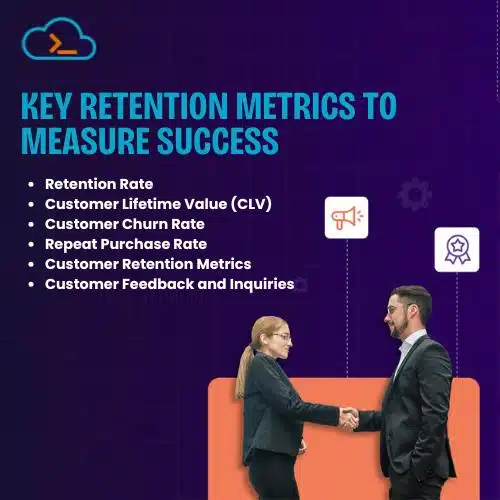
  • Retention rate

The retention rate reflects the percentage of customers a business maintains over a given timeframe. It is a fundamental metric that reveals how effectively your retention strategies are working.

  • Formula: [(Number of Customers at the Beginning of the Period – Number of Customers Lost During the Period) / Number of Customers at the Beginning of the Period] x 100
  • Customer lifetime value (CLV)

CLV calculates the total revenue a business anticipates from a customer over the duration of their relationship with the company. It helps identify the long-term value of repeat clients.

  • Formula: CLV=[(Average Purchase Value)×(Purchase Frequency)]×(Customer Lifespan)
  • Customer churn rate

The churn rate measures the percentage of customers who stop doing business with you during a specified period. A high churn rate indicates dissatisfaction or ineffective retention plans.

  • Formula: [(Number of Customers Lost During the Period) / Number of Customers at the Beginning of the Period] x 100
  • Repeat purchase rate

This metric shows the percentage of customers who make multiple purchases, reflecting the effectiveness of customer incentive programs and customer retention plans.

  • Formula: [(Total Customers)/(Repeat Customers​)]×100
  • Customer retention metrics

Customer retention rate can be assessed using metrics such as:

  • Net promoter score (NPS): Measures the likelihood of customers recommending your business.
  • Customer satisfaction score (CSAT): Gauges satisfaction levels from direct feedback.
  • Customer feedback and inquiries

Analyzing client feedback and inquiries offers applicable insights into customer pain points and areas for improvement.

Boost your brand’s online visibility with the expertise of our professional Content Marketing Services designed to engage your audience and drive meaningful results.

Key Retention Metrics to Measure Success

How to measure retention analytics

  • Define clear objectives: Establish specific, measurable, achievable, relevant, and time-bound (SMART) goals for customer retention.
  • Choose the right metrics: Select the specific metrics that are most relevant to your business objectives and industry.
  • Gather data: Utilize a variety of data sources, including CRM systems, website analytics, customer surveys, and social media monitoring.
  • Analyze data: Leverage data analysis tools and methods to uncover trends, patterns, and opportunities for enhancement.
  • Segment customers: Analyze customer data to identify different customer segments and tailor retention plans accordingly.
  • Track performance over time: Consistently track key retention metrics to assess progress and pinpoint opportunities for improvement.
  • Leverage predictive analytics: Utilize analytics to forecast future customer behavior and proactively address potential churn risks.

Strategies to optimize retention metrics

Tracking customer retention metrics and other key metrics helps in understanding business performance. By analyzing customers acquired, average revenue, and inventory turnover, companies can identify areas for improvement. Additionally, optimizing the hiring process and evaluating marketing ROI ensures resources are effectively utilized. Regularly gathering feedback from customers helps refine strategies and build long-term loyalty.

  • Enhance customer interactions – Personalized interactions and timely responses to customer inquiries can significantly improve retention activities. Predictive data analysis software can help tailor the user journey.
  • Implement loyalty programs – Reward programs for repeat clients incentivize loyalty and increase the average purchase value.
  • Address churn proactively – Identifying bottlenecks and customer segments with high attrition rates enables businesses to implement corrective measures.
  • Gather and act on feedback – Use firsthand feedback to continuously improve products, services, and the overall consumer journey.
  • Leverage analytics tools – Advanced tools provide actionable insights into market trends, customer categories, and performance metrics.
  • Align retention efforts with business goals – Ensure that retention strategies contribute to overarching goals, such as increasing total revenue or enhancing employee satisfaction.

Best metric to measure customer retention

Measurement of customer retention metrics depends on your business model and goals. For instance:

  • Retention rate is ideal for understanding overall customer retention.
  • Customer lifetime value (CLV) provides insights into the financial impact of retention.
  • Churn rate helps identify areas needing improvement.

Partner with a leading Enterprise SEO company in India to boost your website’s visibility, drive organic traffic, and achieve long-term growth.

Key takeaways

  • Retention rate, customer lifetime value (CLV), and churn rate are critical metrics for measuring customer retention success. These metrics provide insights into customer loyalty, financial impact, and areas for improvement.
  • Effective retention strategies include personalized interactions, loyalty programs, proactive churn management, and leveraging predictive analytics to tailor customer experiences and minimize attrition.
  • Continuous analysis of customer feedback, segmentation, and performance metrics ensures retention strategies align with business goals, driving long-term growth and profitability.

Conclusion

Measuring success in 2025 requires a thorough understanding of retention metrics. By focusing on the key metrics – such as retention rate, CLV, and churn rate – and implementing effective retention strategies, businesses can drive scalable growth and foster long-term customer retention. Continuous improvement, informed by actionable insights and client feedback, will remain essential for achieving retention goals.

Freuently asked questions

What is the difference between customer retention and loyalty?

Customer retention focuses on maintaining repeat clients, while loyalty emphasizes the emotional connection and advocacy customers have for a brand.

How do customer incentive programs improve retention?

Customer incentive programs incentivize repeat purchases by offering rewards, fostering a sense of exclusivity and engagement.

Can high employee satisfaction impact retention?

Yes, satisfied employees often deliver better customer service, positively influencing customer retention.

What role does the customer journey play in retention?

A seamless and engaging client journey enhances the overall experience, increasing the likelihood of repeat purchases and loyalty.

AI-Generated Content: Is It The Future Of Social Media Marketing? 

AI-Generated Content: Is It The Future Of Social Media Marketing? 

By Rashmita Patro

Social media marketing is the backbone of modern digital strategies, with billions of users across platforms like Facebook, Instagram, TikTok, and LinkedIn. As competition increases, marketers face increasing pressure to deliver engaging, personalized, and consistent content at scale. Artificial intelligence (AI) and Machine Learning (ML) are reshaping how businesses approach social media.

AI’s capabilities, including content generation, predictive analytics, and social listening, have made it indispensable in streamlining processes, improving efficiency, and enhancing audience engagement. But as AI tools continue to evolve, many wonder: Can AI-generated content creation become the dominant force in social media marketing?

How AI Is Transforming Social Media Marketing

Artificial intelligence is transforming content marketing by introducing machine learning and AI algorithms that support automated content creation across social media platforms. These tools enable businesses to simplify their processes, ensure consistent messaging, and create compelling content that resonates with their target audience.

Generative AI tools provide insights, allowing marketers to dig deeper into user interactions, fine-tune campaigns, and make data-driven decisions. By enhancing customer experiences and optimizing marketing strategies, AI has become a game changer, equipping brands with the key ways to stay ahead in the competitive landscape while strengthening their presence on social media accounts. Transform your online growth with the best digital marketing agency in India, offering tailored strategies to achieve your business goals. Let’s examine the key areas where AI is making a difference:

1. AI in Content Creation

AI-driven content generation tools, like generative AI, produce social media posts, blogs, images, and even videos. For instance, a Gen AI tool can analyze data on user behavior, trends, and audience choices to create a compelling Instagram post that resonates with a specific demographic.

Key Benefits:

  • Automated creation of captions, hashtags, and visuals.
  • Faster content production for real-time campaigns.
  • Enhanced personalization through data insights.

Challenges:

  • Risk of generic or impersonal content without human intervention.
  • Maintaining creativity and originality while using automated tools.

2. Social Listening and User Behavior Analysis

AI-powered platforms track and analyze consumer behavior, conversations, and trends in real-time. This process, known as ‘social listening, ‘enables brands to monitor their reputation, understand customer sentiments, and create content that aligns with audience expectations.
Applications of Social Listening:

  • Identifying trending topics for timely campaigns.
  • Understanding user preferences to refine content strategies.
  • Monitoring competitors to identify gaps and opportunities.

3. Enhancing Customer Interactions

Virtual assistants and chatbots powered by AI have revolutionized customer service on social media. These tools provide Immediate replies to customer queries, offer product recommendations, and resolve issues, all while ensuring a seamless user experience.

Advantages:

  • 24/7 availability for customer support.
  • Handling repetitive tasks efficiently, freeing up human resources.
  • Maintain consistency of the tone across all interactions.

4. Optimizing Content Strategies with Predictive Analytics

AI uses historical data and learning algorithms to forecast what type of content will perform best. It identifies the optimal posting times, formats, and platforms for maximum engagement.

Predictive Analytics in Action:

  • Determining which topics resonate with different audience segments.
  • Forecasting engagement rates based on past campaign performance.
  • Helping marketers adjust strategies in real time.

5. Personalization at Scale

AI allows marketers to create hyper-personalized campaigns. By analyzing individual user preferences, brands can deliver content that feels tailored, boosting engagement and customer loyalty.

Examples:

  • Personalized product recommendations based on browsing history.
  • Dynamic ads that adapt to user preferences in real time.
  • Maintaining creativity and originality while using automated tools.

Balancing AI and Human Creativity

AI’s influence on social media platforms extends far beyond automation. It has introduced smarter, data-driven strategies that enhance every stage of the content marketing services funnel. While AI excels in efficiency and scalability, creative thinking remains irreplaceable when crafting content that connects emotionally with audiences. The key is finding the right balance:

Where AI Excels:

  • Automating repetitive tasks.
  • Analyzing data for actionable insights.
  • Generating large volumes of content quickly.

Where Humans Are Essential:

  • Infusing storytelling and emotion into campaigns.
  • Ensuring cultural and contextual relevance.
  • Maintaining a unique brand voice and identity.

Marketers must use AI as a tool to complement their creative instincts rather than relying on it entirely. Boost your brand’s online presence with a professional content approach designed to engage your audience and drive meaningful results.

AI in Social Media: Enhancing Connection Through Smart Innovation

AI in Social Media: Enhancing Connection Through Smart Innovation

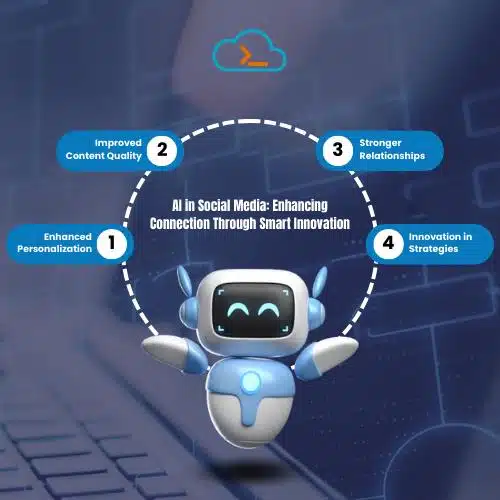
The evolving role of AI in social media platforms is set to expand, but it will likely serve as a complement to human expertise rather than a replacement. While AI will refine its ability to craft highly targeted campaigns and improve content quality, innovative thinking, and emotional insight will remain essential in ensuring depth and resonance in campaigns.

  • Enhanced Personalization: AI will refine its ability to craft highly targeted campaigns by leveraging user preferences and Forecasting analytics.
  • Improved Content Quality: While AI can generate content quickly, creative thinking will still be necessary to ensure depth and emotional resonance.
  • Stronger Relationships: AI algorithms will enable brands to engage their audiences in more meaningful ways, fostering loyalty and trust.
  • Innovation in Strategies: Emerging technologies will continue to provide new tools for marketers to create innovative campaigns that stay ahead of trends.

Leveraging artificial intelligence and AI algorithms, businesses can enhance their content marketing strategies across social media platforms and optimize their social media accounts. Companion with the Best Social Media Marketing Agency in India to enhance your web presence and connect with your target audience effectively.

Key Takeaways

  • Artificial intelligence is transforming social media marketing by streamlining processes, improving efficiency, and driving personalized engagement at scale.
  • From automated content creation to predictive analytics, AI tools empower brands to craft compelling campaigns tailored to their audience’s preferences.
  • While AI enhances speed and precision, human creativity remains essential for emotional resonance and maintaining a unique brand voice.

Conclusion

AI-generated content is undoubtedly a transformative force in social media platforms. Its capacity to streamline processes, provide actionable insights, and enhance personalization makes it an invaluable tool for brands. However, the human touch remains irreplaceable in crafting emotionally engaging content and culturally relevant campaigns.

Frequently Asked Questions

1. Will AI Replace Social Media Marketing?

No, AI will not replace social media marketing. Instead, it will act as a powerful enabler, empowering marketers to work smarter and more effectively. Human imagination, emotional insight, and thoughtful strategy continue to be essential. With AI-generated content, marketers can feel more in control and confident in their abilities, knowing that they have a powerful tool at their disposal.

2. What are the benefits of using AI in social media marketing?

AI offers numerous advantages and opportunities, including saving time, improved efficiency, enhanced personalization, and data-driven insights that help create more effective campaigns.

3. How can AI improve audience engagement?

AI enhances customer engagement by delivering personalized content, automating interactions through chatbots, and analyzing data to optimize experiences in real time.

4. Is AI affordable for small businesses?

Yes, many AI and ML tools are not only powerful but also affordable and scalable, making them accessible to small businesses looking to improve their social media strategies.

We use cookies to ensure that we give you the best experience on our website. If you continue to use this site we will assume that you are happy with it.

Cookies settings
Accept
Privacy & Cookie policy
Privacy & Cookies policy
Cookie name Active

Privacy Policy

What information do we collect?

We collect information from you when you register on our site or place an order. When ordering or registering on our site, as appropriate, you may be asked to enter your: name, e-mail address or mailing address.

What do we use your information for?

Any of the information we collect from you may be used in one of the following ways: To personalize your experience (your information helps us to better respond to your individual needs) To improve our website (we continually strive to improve our website offerings based on the information and feedback we receive from you) To improve customer service (your information helps us to more effectively respond to your customer service requests and support needs) To process transactions Your information, whether public or private, will not be sold, exchanged, transferred, or given to any other company for any reason whatsoever, without your consent, other than for the express purpose of delivering the purchased product or service requested. To administer a contest, promotion, survey or other site feature To send periodic emails The email address you provide for order processing, will only be used to send you information and updates pertaining to your order.

How do we protect your information?

We implement a variety of security measures to maintain the safety of your personal information when you place an order or enter, submit, or access your personal information. We offer the use of a secure server. All supplied sensitive/credit information is transmitted via Secure Socket Layer (SSL) technology and then encrypted into our Payment gateway providers database only to be accessible by those authorized with special access rights to such systems, and are required to?keep the information confidential. After a transaction, your private information (credit cards, social security numbers, financials, etc.) will not be kept on file for more than 60 days.

Do we use cookies?

Yes (Cookies are small files that a site or its service provider transfers to your computers hard drive through your Web browser (if you allow) that enables the sites or service providers systems to recognize your browser and capture and remember certain information We use cookies to help us remember and process the items in your shopping cart, understand and save your preferences for future visits, keep track of advertisements and compile aggregate data about site traffic and site interaction so that we can offer better site experiences and tools in the future. We may contract with third-party service providers to assist us in better understanding our site visitors. These service providers are not permitted to use the information collected on our behalf except to help us conduct and improve our business. If you prefer, you can choose to have your computer warn you each time a cookie is being sent, or you can choose to turn off all cookies via your browser settings. Like most websites, if you turn your cookies off, some of our services may not function properly. However, you can still place orders by contacting customer service. Google Analytics We use Google Analytics on our sites for anonymous reporting of site usage and for advertising on the site. If you would like to opt-out of Google Analytics monitoring your behaviour on our sites please use this link (https://tools.google.com/dlpage/gaoptout/)

Do we disclose any information to outside parties?

We do not sell, trade, or otherwise transfer to outside parties your personally identifiable information. This does not include trusted third parties who assist us in operating our website, conducting our business, or servicing you, so long as those parties agree to keep this information confidential. We may also release your information when we believe release is appropriate to comply with the law, enforce our site policies, or protect ours or others rights, property, or safety. However, non-personally identifiable visitor information may be provided to other parties for marketing, advertising, or other uses.

Registration

The minimum information we need to register you is your name, email address and a password. We will ask you more questions for different services, including sales promotions. Unless we say otherwise, you have to answer all the registration questions. We may also ask some other, voluntary questions during registration for certain services (for example, professional networks) so we can gain a clearer understanding of who you are. This also allows us to personalise services for you. To assist us in our marketing, in addition to the data that you provide to us if you register, we may also obtain data from trusted third parties to help us understand what you might be interested in. This ‘profiling’ information is produced from a variety of sources, including publicly available data (such as the electoral roll) or from sources such as surveys and polls where you have given your permission for your data to be shared. You can choose not to have such data shared with the Guardian from these sources by logging into your account and changing the settings in the privacy section. After you have registered, and with your permission, we may send you emails we think may interest you. Newsletters may be personalised based on what you have been reading on theguardian.com. At any time you can decide not to receive these emails and will be able to ‘unsubscribe’. Logging in using social networking credentials If you log-in to our sites using a Facebook log-in, you are granting permission to Facebook to share your user details with us. This will include your name, email address, date of birth and location which will then be used to form a Guardian identity. You can also use your picture from Facebook as part of your profile. This will also allow us and Facebook to share your, networks, user ID and any other information you choose to share according to your Facebook account settings. If you remove the Guardian app from your Facebook settings, we will no longer have access to this information. If you log-in to our sites using a Google log-in, you grant permission to Google to share your user details with us. This will include your name, email address, date of birth, sex and location which we will then use to form a Guardian identity. You may use your picture from Google as part of your profile. This also allows us to share your networks, user ID and any other information you choose to share according to your Google account settings. If you remove the Guardian from your Google settings, we will no longer have access to this information. If you log-in to our sites using a twitter log-in, we receive your avatar (the small picture that appears next to your tweets) and twitter username.

Children’s Online Privacy Protection Act Compliance

We are in compliance with the requirements of COPPA (Childrens Online Privacy Protection Act), we do not collect any information from anyone under 13 years of age. Our website, products and services are all directed to people who are at least 13 years old or older.

Updating your personal information

We offer a ‘My details’ page (also known as Dashboard), where you can update your personal information at any time, and change your marketing preferences. You can get to this page from most pages on the site – simply click on the ‘My details’ link at the top of the screen when you are signed in.

Online Privacy Policy Only

This online privacy policy applies only to information collected through our website and not to information collected offline.

Your Consent

By using our site, you consent to our privacy policy.

Changes to our Privacy Policy

If we decide to change our privacy policy, we will post those changes on this page.
Save settings
Cookies settings