
Why Testimonials Are An Important Part Of Your Website?

Why Testimonials Are An Important Part Of Your Website?

By Rasmita Patro

Testimonials are the digital word-of-mouth that can significantly impact your website’s success. They offer potential customers essential insights into your products or services, aiding them in making well-informed decisions. Incorporating testimonials strategically throughout your website can elevate your brand’s credibility and significantly enhance your online presence.

In today’s competitive market, testimonials not only build trust but also serve as powerful tools for driving conversions and improving search engine rankings. By showcasing authentic customer experiences, you provide valuable social proof that reassures potential buyers, helping them feel confident in their decisions. Let’s explore the significance of testimonials and how they can strengthen your digital marketing approach.

The Role Of Testimonials In Establishing Trust

Testimonials on the website offer potential customers a glimpse of the real experiences that other users have had with your product or service. Genuine customers sharing positive testimonials helps establish trust. When customers observe that others have had favorable experiences, they are more inclined to feel assured about their purchasing choice.

The authenticity of the testimonial plays a crucial role here. Fake testimonials can do more harm than good, undermining your brand’s credibility and eroding trust. Conversely, feedback from satisfied customers serves as a strong endorsement, enhancing the attractiveness of your product or service to prospective buyers.

Testimonials And Their Impact On SEO

In today’s competitive landscape, social proof is invaluable. Positive reviews, including video reviews, act as a signal to both site visitors and search tools that your business is credible and trustworthy. Search platforms like Google favor websites that show evidence of user satisfaction and feedback, especially if these testimonials are integrated into and featured strategically on landing pages, service sections, and Google Business profiles.

Testimonials are a powerful tool for enhancing trust, credibility, and customer engagement.

  • Social Proof: Testimonials act as social proof, demonstrating that others have had positive experiences with your brand. It can alleviate doubts and build trust among potential customers.
  • Enhanced Credibility: Real testimonials can greatly strengthen your brand credibility. Seeing actual people discuss their positive experiences makes potential customers more likely to trust your claims.
  • Improved Search Engine Rankings: Search engines favor user-generated content such as testimonials, so incorporating them into your website can improve your search and attract more organic traffic.
  • Increased Conversions: Testimonials can directly influence purchasing decisions. When potential customers see how others have benefited from your products or services, they are more likely to take the next step and make a purchase.

Customer testimonials not only enhance the customer experience but also contribute to SEO efforts. Search platforms tend to favor pages that include fresh, authentic, user-generated content—and testimonial pages are a great way to provide this. Encouraging real customers to leave online reviews and share their experiences can enhance search rankings, attract more website traffic, and improve the chances of converting potential buyers into paying customers.

Work with the Best Digital Marketing Agency in India to strengthen your brand, boost your online presence, and achieve remarkable outcomes.

Testimonials And Their Impact On SEO

Testimonials In Marketing

Testimonials play a crucial role in your overall marketing strategy. They can be used in various ways to enhance your brand’s reputation and drive sales. Here are some key strategies:

  • Dedicated Testimonials Page: Set up a dedicated page on your website to feature testimonials, making them readily accessible to visitors highlighting your commitment to customer satisfaction.
  • Strategic Placement: Feature testimonials across your website, including the homepage, product pages, and service detail pages, to ensure they are visible to customers throughout their journey.
  • Social Media Sharing: Encourage happy customers to post their testimonials on social media to boost your brand’s visibility and expand your audience reach.
  • Email Marketing: Incorporate testimonials into your email marketing campaigns to engage leads and promote repeat business.
  • Content Marketing: Use the brand as a source of content for blog posts, articles, and case studies. It can help you establish thought leadership and attract new customers.

Our Digital Marketing Services help new businesses grow by improving their online presence, increasing traffic, and driving conversions.

Strategic Positioning Of Testimonials

Maximizing the impact of testimonials on your website depends on their placement. Here are a few areas where you can strategically place testimonials:

  • Homepage: The homepage is usually the first point of contact for visitors, so placing glowing testimonials here sets the tone for a positive user experience.
  • Service Pages: Featuring success stories on specific service detail pages helps validate the quality of each offering. For instance, offer different tiers of service, each one should include testimonials that highlight the value delivered at that level.
  • Landing Pages: Placing customer testimonials on landing pages provides immediate social proof, which helps increase conversion rates.
  • Dedicated Testimonial Page: Creating a review page allows potential customers to browse various customer experiences in one place. It builds further credibility and demonstrates transparency.

Types Of Testimonials

Website testimonials are a crucial part of any website because they help build immediate trust between your business and potential customers. According to surveys, most consumers look at digital reviews before making a purchase decision, making testimonials a key driver for conversions.

  • Written Testimonials – Written testimonials on a website can be on multiple parts of the site, from a review page to a landing page, or even sprinkled throughout marketing materials. Simple yet effective, they allow honest customers to speak directly to prospective customers, giving insights into the product or service.
  • Video Testimonials – These are a step further, providing positive reviews in a more engaging format. Video feedback allows customers to see the emotions and enthusiasm behind the feedback, which has a greater psychological impact on website visitors.
  • Third-Party Reviews – Showcasing reviews from platforms like Google Business Listings adds a layer of credibility. These are harder to manipulate, and potential customers often trust them more than reviews featured solely on your site.

Key Takeaways

  • Testimonials provide real customer feedback that establishes trust and boosts credibility.
  • Testimonials improve SEO by adding fresh, user-generated content that enhances search engine rankings.
  • Testimonials act as social proof, influencing potential buyers to make a purchase and increasing conversion rates.

Conclusion

Testimonials on websites are powerful tools for building trust, enhancing credibility, and driving conversions. By understanding the psychology behind them, implementing strategic placement, and regularly evaluating their impact, you can elevate your business to the next level. Genuine feedback from satisfied customers can be a true game-changer for your brand.

Frequently Asked Questions

1. What is the difference between a testimonial and a review?

A testimonial is usually curated by a business and showcased on its website, while a review is typically shared testimonials on third-party review sites like Google or Yelp.

2. How can video testimonials boost conversions?

Video feedback brings a personal touch, allowing potential buyers to see the real emotions behind the customer feedback. It leads to greater engagement and, ultimately, higher conversion rates.

3. How do testimonials improve SEO?

Testimonials contribute to SEO by providing fresh, relevant, and unique content. They also improve your site’s credibility, leading to better rankings in search platforms.
Sales Metrics Analysis – Your Key To Improved Sales Performance

Sales Metrics Analysis – Your Key To Improved Sales Performance

By Rasmita Patro

In today’s competitive business landscape, understanding and analyzing sales performance is crucial for achieving sustainable growth. Sales metrics provide invaluable insights into the effectiveness of your sales team, processes, and strategies. By tracking and KPIs, you can identify areas for improvement, optimize your sales efforts, and drive better results.

Sales performance metrics are quantifiable measures that assess the success of your sales activities by providing detailed data on aspects such as lead generation, customer acquisition, and retention. Monitoring and analyzing these metrics offer valuable insights into your sales team’s performance, helps identify emerging trends, and enables informed, data-driven decisions to enhance outcomes. These metrics go beyond simple number tracking, offering a comprehensive view of the sales journey and helping to uncover patterns and potential bottlenecks that impact overall success.

Top 5 Metrics for Outbound Sales Professionals

For outbound sales professionals, focusing on key sales metrics is essential for optimizing performance and driving profitable sales outcomes.

  • Conversion Rate: This metric tracks the proportion of leads that turn into customers, serving as a key gauge of how well your sales team qualifies prospects and secures average deal size.
  • Average Deal Size: The total revenue generated per closed deal. Tracking this metric helps you understand the profitability of your sales initiative and identify opportunities to increase average revenue per customer.
  • Selling Cycle Length: This metric evaluates the average duration needed to finalize a deal, from the first point of contact to the signing of the annual contract value. Shortening the average sales cycle length can boost sales efficiency and drive higher revenue.
  • Customer Acquisition Cost (CAC): CAC measures the total cost of acquiring a new customer. It is essential to track CAC to ensure that your selling efforts are generating a positive return on investment (ROI).
  • Customer Lifetime Value (CLTV): CLTV represents the total revenue generated by average customer lifetime. Monitoring CLTV allows you to gauge the long-term worth of your customers and uncover opportunities for upselling and cross-selling.

Collaborating with the leading Best Digital Marketing Agency in India ensures your brand receives top-notch marketing strategies designed to boost visibility, engagement, and growth in today’s competitive market.

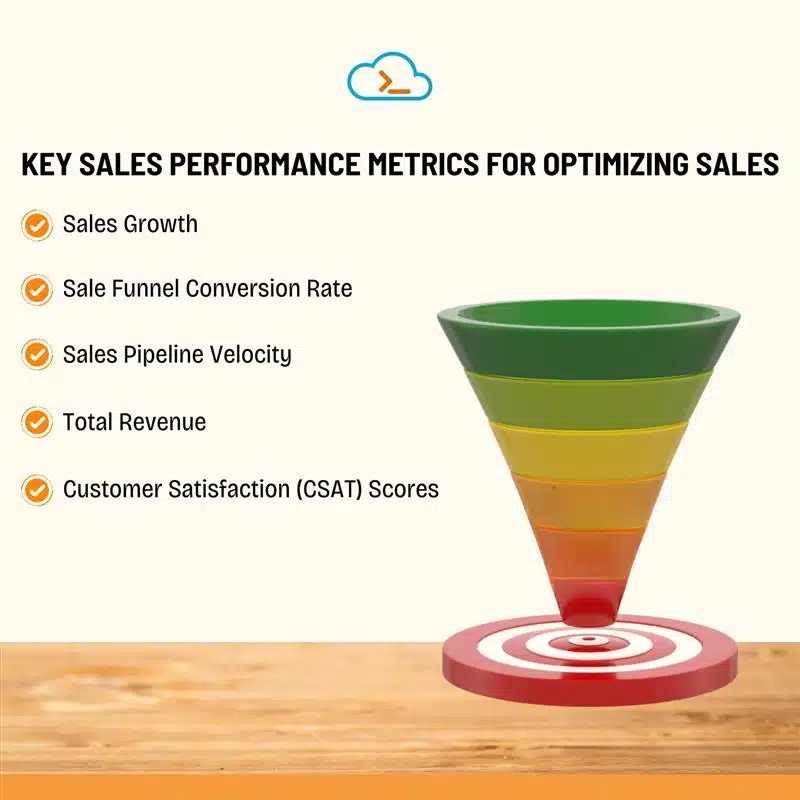
Key Sales Performance Metrics for Optimizing Sales

Consistently monitoring the following key sales metrics is essential for maximizing your sales team’s effectiveness:

  • Sales Growth: Measures the rate at which your company’s revenue is increasing over time. Monitoring this helps you spot trends and adjust strategies to maintain momentum.
  • Sale Funnel Conversion Rate: The percentage of leads that progress through each stage of the sales funnel, from awareness to purchase.
  • Sales Pipeline Velocity: This metric shows how quickly leads move through the sales pipeline, helping to identify bottlenecks in the sales process.
  • Total Revenue: The total income from sales offers a complete view of your company’s sales performance.
  • Customer Satisfaction (CSAT) Scores: Monitoring CSAT ensures that you’re not only closing sales but also maintaining happy customers, which leads to repeat business.
Key Sales Performance Metrics for Optimizing Sales

Analyzing Leading and Performance Indicators in Sales

Understanding the difference between leading and performance indicators is crucial when analyzing Sales Metrics. Both types of indicators provide valuable information but serve different purposes:

  • Leading Indicators: These metrics predict future performance, offering insights into how current sales activities might influence future outcomes. Examples include the number of meetings scheduled, leads generated, or proposals sent. Leading indicators allow sales managers to identify potential problems early and make adjustments before it’s too late.
  • Lagging Indicators: Lagging indicators measure past key performance indicators. Metrics like gross revenue, closed deals, and customer retention fall into this category. While outcome indicators are useful for evaluating overall success, they need to provide immediate feedback on current efforts.

Utilizing Sales Metric to Strengthen Selling Strategy

Sales performance metrics not only reflect performance but also serve as building blocks for a successful selling strategy. Here’s how metrics can help strengthen your sales:

  1. Streamlining the Sales Process: Monitoring metrics such as sales duration and conversion rates helps pinpoint inefficiencies and refine the sales process, significantly boosting overall team performance.
  2. Enhancing Sales Opportunities: Historical data on past sales opportunities can reveal patterns and trends that help refine your prospecting strategies. Prioritize leads with the highest potential for closing, focusing on quality rather than quantity.
  3. Boosting Sales Rep Performance: Tracking individual performance metrics such as gross revenue generated, or deal closure rates allows for a more targeted approach to coaching and development. Identifying top performers and those who need additional training can significantly boost overall team productivity.
  4. Optimizing Customer Acquisition and Retention: Monitoring CAC and CLV ensures that your sales team is bal ancing existing customer acquisition costs with the long-term value of the customer. This balance is key to maximizing profitability and maintaining sustainable growth.

Key Takeaways

  • Tracking and analyzing key sales metrics, can help to identify the areas for improvement, optimize sales strategies, and drive better results.
  • Leading indicators predict future performance, while lagging indicators measure past results. Understanding both is essential for effective sales management.
  • Sales metrics can help to enhance sales opportunities, boost sales rep performance, and optimize customer acquisition and retention.

Conclusion

Sales performance metrics analysis provides the foundation for a successful sales strategy. Whether you’re looking to improve conversion rates, shorten the sales cycle, or reduce customer acquisition costs, tracking the right metrics is critical. By analyzing sales data and incorporating it into decision-making, you gain valuable information to elevate your sales performance and drive consistent growth. Equipping your team with the appropriate tools and resources to track these essential metrics will position them for success in today’s competitive market.

Frequently Asked Questions

1. How can sales analytics software help track performance metrics?

Sales metric software automates the process of tracking today and provides real-time insights into performance. It integrates with CRM tools to streamline data collection and reporting, making it easier to identify trends and make data-driven decisions.

2. Which sales performance metrics are most important for SaaS companies?

For SaaS companies, key sales metrics include MRR, CCR, CAC, and CLV. These metrics help measure the stability and scalability of the business.

3. What role do sales targets play in driving performance?

Sales targets provide clear goals for the sales team to work toward. By setting realistic and measurable targets, sales leaders can motivate the team, track progress, and adjust strategies to ensure the team is consistently meeting or exceeding goals.
Top Responsive Web Design Principles You Need To Know

Top Responsive Web Design Principles You Need To Know

By Aparna Sushumna

Responsive web design is an approach to making web pages render well on various devices and window or screen sizes. It uses flexible layouts and images, as well as media queries that detect the user’s screen size and adjust the design accordingly. Responsive web design ensures a well-structured, user-friendly, and responsive web page that looks great and functions well on various devices and web browsers.

Responsive web design aims to ensure seamless user access and navigation across various devices, including desktop computers, laptops, tablets, and smartphones. By eliminating the need for separate website versions, responsive design creates a single adaptable website that caters to users’ access to different viewing environments.

Partnering with a reputable web design company can help you realize the primary goal of responsive web design – providing easy access and navigation for users across all devices.

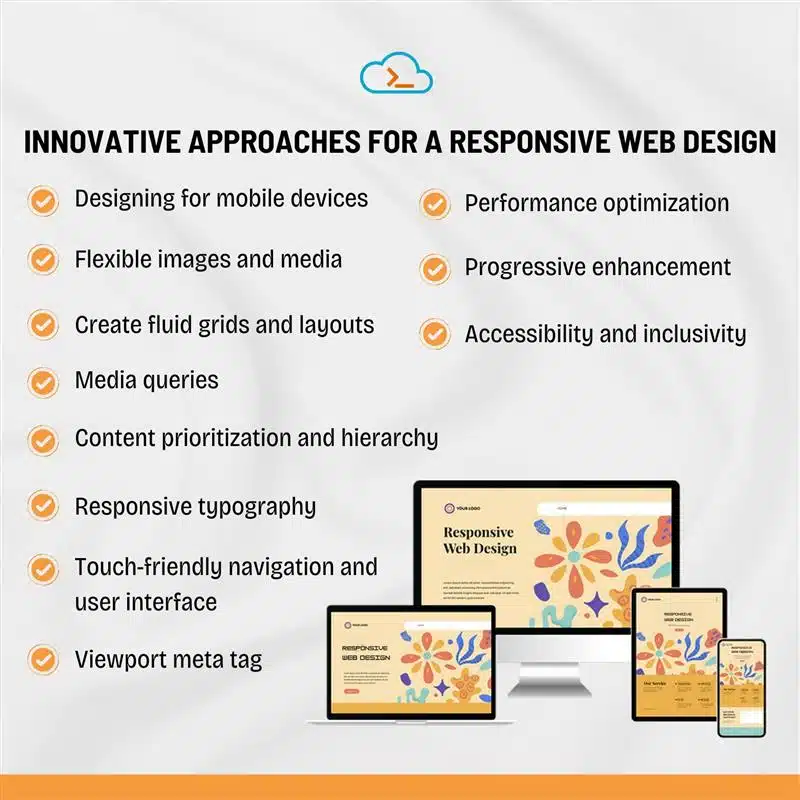
Innovative Approaches for a Responsive Web Design

Responsive web design (RWD) ensures that websites provide an optimal user experience across various devices and screen sizes. Below are the top principles of responsive web design :

1. Designing for mobile devices

Mobile-first design is a crucial principle in crafting websites that resonate with online visitors’ current needs and expectations. Designing for mobile devices involves prioritizing simplicity, efficiency, and a streamlined user experience. The mobile-first design prioritizes small screens to ensure a seamless user experience across various devices. Start by designing for the smallest of smaller screens at first, then gradually add complexity for larger screens. This approach ensures that the core experience remains intact, regardless of the device.

2. Flexible images and media

Images, videos, and other media should adjust in size relative to screen space for their containing elements using max-width properties (e.g., `max-width: 100%`). This prevents media from overflowing their containers on smaller screens. These images also resize proportionally to maintain their aspect ratio as the screen width changes.

3. Create fluid grids and layouts

Designing responsive websites that adapt to different devices and screen sizes relies on the use of flexible layouts and grids. Using relative units and percentages to define the size and positioning of elements within a website’s layout fluid grids ensures flexibility.

4. Media queries

CSS(cascading style sheets) media queries allow you to implement different styles for different screen sizes. By specifying breakpoints (e.g., 768px for tablets and 1024px for desktops), you can create tailored designs and optimize images that ensure usability and readability on all devices.

5. Content prioritization and hierarchy

Content prioritization and hierarchy are crucial for designing responsive websites that cater to diverse devices and user preferences. Prioritizing content according to its importance and relevance ensures a user’s device-friendly experience. Effective visual hierarchy is the art of arranging content in a manner that effortlessly guides visitors through the information. Content marketing services suggest and guide businesses in appropriate content prioritization.

6. Responsive typography

Use scalable fonts (like `em` or `rem` units) to ensure that text is legible on both small and large screens. Responsive typography adjusts font sizes dynamically based on screen size and device.

7. Touch-friendly navigation and user interface

Intuitive navigation is essential for responsive web design, prioritizing clarity and accessibility. Navigation menus should be clear and intuitive, allowing users to access various sections easily. User-friendly forms and interactive elements are also essential for a responsive website. Design buttons and interactive elements to be large enough and spaced appropriately for touch interaction. A good rule of thumb is to use a minimum touch target size of 44×44 pixels for mobile devices.

8. Viewport meta tag

Make sure always to include the viewport meta tag in the HTML head. Tagging will allow you to control the layout on mobile browsers and ensure that the design scales properly. The tag you should use is: “

9. Performance optimization

Load time and performance optimization are crucial for a positive user experience. Optimizing images, using caching strategies, and minimizing code can improve website performance. For consistent performance, one should prioritize performance by optimizing images, browser caching, reducing unnecessary assets, and using techniques like lazy loading to ensure quick load times on slower mobile networks.

10. Progressive enhancement

Ensure that your website or web page’s core content and functionality work even on older browsers or slower devices by layering additional features for newer, more capable browsers.

11. Accessibility and inclusivity

Executing responsive web design is essential for enhancing user feedback and accessibility across different devices. By prioritizing accessibility features such as keyboard navigation support and color contrast, we can ensure equal access and usability for users, including those with disabilities or impairments.

Innovative Approaches For a Responsive Web Design

Benefits of Responsive Web Design

Responsive web design is crucial in today’s digital landscape, catering to diverse devices and user preferences. It ensures a seamless user experience across mobile devices, tablets, and desktop computers.

Responsive web design is essential for creating websites for mobile traffic that captivate and delight users, drive traffic, and achieve business goals.

Implementing Responsive Web Designs

Creating a responsive web design involves using media queries to insert different styles to a website based on the device or screen being used. Flexible images, grids, and media queries are essential for developing responsive websites under the expert advice of the best digital marketing agency in India.

Rigorous testing for responsiveness guarantees that the website adapts seamlessly and functions effectively across an array of devices and screen sizes.

Best Practices for Responsive Web Design

Adhering to best practices under guidance from top digital marketing services in Hyderabad, such as implementing a mobile-first approach and emphasizing quick load times, is crucial for optimal user experience when developing responsive websites. Keeping abreast of design trends and user expectations is vital for achieving success.

Giving priority to user feedback and employing an iterative design process is essential for improving the website.

Key Takeaways

  • Responsive web design is more than just aesthetics. It’s a crucial factor in ensuring optimal user experience, accessibility, and engagement across various devices.
  • Designing websites that seamlessly adapt to different screen sizes and orientations can improve conversion rates, enhance brand perception, and reach a wider audience.
  • Modern responsive web design leverages powerful techniques like Flexbox, CSS Grid, and CSS variables to create dynamic and efficient layouts.

Conclusion

In today’s digital world, it’s essential for website success to incorporate responsive web design. Embracing these principles enables the conception of websites that produce outstanding user experiences across all devices. This approach ensures a well-organized, user-friendly, and adaptable website that excels across various devices, mobile phones, and web browsers.

Frequently Asked Questions

1. What are the 3 basics for responsive web design?

  1. CSS Media Queries: Adapt layouts for different screen sizes.
  2. Fluid Layouts: Ensure content adjusts to various resolutions.
  3. Bootstrap: Utilize a responsive grid system and pre-built components.

2. What is a key thing you need to know about responsive design?

Reliable web development has a lot more than just aesthetics: it also involves usability, visual quality, accessibility, and participation.

3. What are the key elements of a good web design?

A good website is accompanied by several important components and design elements that are crucial for creating a user-friendly experience.
The Influence Of AI Chatbots On Support Workflows

The Influence Of AI Chatbots On Support Workflows

By Rasmita Patro

AI chatbots, driven by artificial intelligence, natural language processing (NLP), and machine learning, have transformed business-customer interactions. These virtual assistants can comprehend and address customer inquiries with human-like responses, deliver immediate support, and enhance overall customer satisfaction. Here’s how AI chatbots work their magic:

Natural language processing (NLP): AI chatbots use NLP to understand and interpret human language. They can process text and voice input and generate appropriate responses.

Machine learning (ML): Automated learning algorithms enable AI chatbots to enhance their performance by learning from interactions and continuously improving their responses over time. They can adapt to different customer inquiries and provide more accurate and timely responses.

AI chatbots are designed to simulate human-like interactions, making it easier for users to obtain information or assistance through conversational interfaces. Dive into the blog to learn more about how AI chatbots are transforming business-customer interactions.

Significant Areas of Impact

  • Customer data: AI chatbots can sift through extensive customer data to detect patterns, preferences, and problem areas. This information can be used to tailor multilingual support team interactions and improve product offerings.
  • Customer queries: AI chatbots can handle a wide range of customer issues, from simple questions to complex issues. By automating routine tasks, they free up human agents to focus on more complex problems.
  • Customer feedback: AI chatbots can gather and assess customer feedback to pinpoint opportunities for enhancement. It helps businesses continuously enhance their products and services.

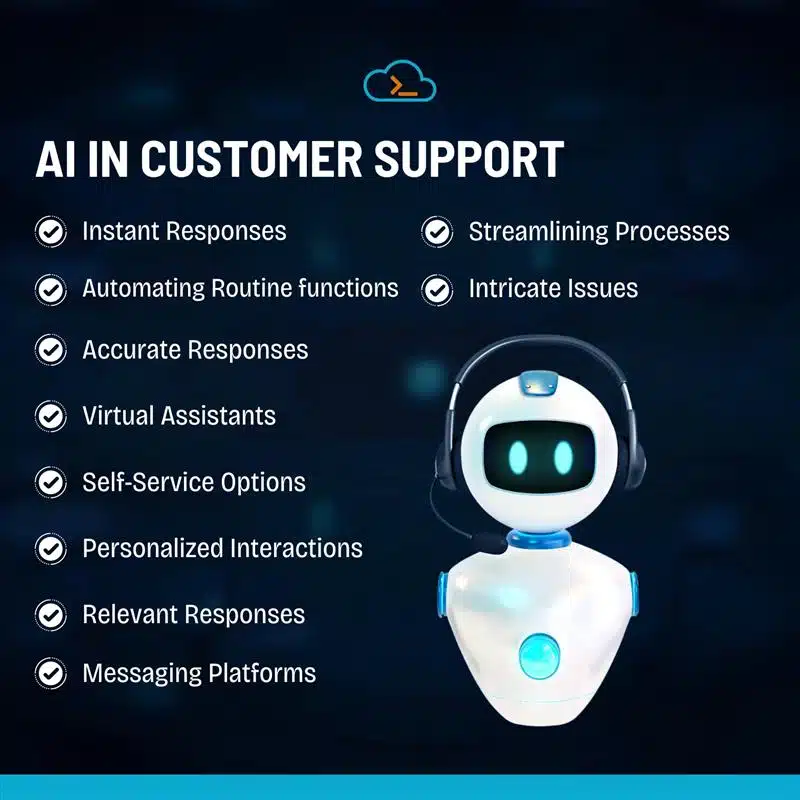
AI in Customer Support

The integration of artificial intelligence chatbots into customer support workflows offers numerous benefits that can significantly enhance the overall customer experience.

  • Instant responses: AI-powered chatbots can provide instant responses to customer issues, reducing wait times and improving customer satisfaction.
  • Automating routine functions: AI chatbots can automate repetitive and managing password resets, thus allowing human agents to handle more intricate problems.
  • Accurate responses: AI chatbots can provide accurate and consistent responses to customer doubts, reducing the risk of errors and improving customer confidence.
  • Virtual assistants: AI chatbots can act as digital assistants, guiding customers through the sales pipeline and providing personalized recommendations.
  • Self-service options: AI chatbots can provide self-service features, enabling customers to resolve their inquiries independently without needing human assistance.
  • Personalized interactions: AI chatbots can personalize customer engagement based on their preferences and history, providing a more relevant and engaging experience.
  • Relevant responses: AI chatbots can provide relevant responses to customer concerns by analyzing their context and understanding their intent.
  • Messaging platforms: AI chatbots can be integrated with popular messaging platforms, making it easier for customers to access support.
  • Streamlining processes: AI chatbots can streamline support processes, reducing costs and improving efficiency.
  • Intricate issues: While AI chatbots can handle many repetitive customer queries, they may still require human input for intricate issues or sensitive topics.
AI-powered chatbots can be integrated with CRM platforms, messaging apps, and other customer support systems to access consumer data, provide personalized responses, and ensure a seamless customer experience across multiple channels.

AI in Live Chat and Customer Support

AI has had a profound impact on live chat and customer support teams, transforming how businesses engage with their customers. Some of the key impacts include:

  • Round-the-clock support: AI chatbots offer 24/7 support, guaranteeing that customers have constant access to help whenever they need it.
  • Assist customers: AI chatbots can help customers with a range of tasks, including placing orders, tracking deliveries, and resolving issues.
  • Proactive support: AI chatbots can proactively contact customers with relevant information or offers, improving customer engagement and loyalty.
  • Business leaders: AI chatbots can provide valuable insights to corporate leaders, helping them to identify trends, improve customer satisfaction, and optimize operations.
  • Human intervention: While AI-powered chatbots can handle many customer interactions, human agents may still be required to handle complex issues or sensitive topics.
  • Proactive messages: AI chatbots send customers messages such as order confirmations, shipping updates, and personalized recommendations.
  • Multiple customers: AI chatbots can handle various customers simultaneously, improving efficiency and reducing wait times.
  • Operational costs: AI chatbots can help reduce operating expenses by automating tasks and improving efficiency.

Challenges and Considerations

While AI-powered chatbots offer numerous benefits, there are also challenges to consider:

  • Data privacy: Businesses need to safeguard client data and adhere to applicable regulations to ensure secure handling.
  • Ethical considerations: AI chatbots should be designed to avoid biases and discrimination and to protect customer privacy.
  • Technical limitations: AI technology is still evolving, and chatbots may need help with complex or ambiguous queries.
  • Human touch: While AI can handle many customer interactions, there are situations that require the empathy and judgment of a human agent.

Chatbots in Marketing and Sales

Artificial Intelligence chatbots are not limited to customer multilingual support; they also play a crucial role in marketing and sales.

  • Assisting in the sales funnel: AI chatbots guide customers through the sales funnel by providing timely and relevant information. They can answer product-related questions, offer recommendations, and even process orders.
  • Collecting and analyzing consumer data: AI chatbots collect valuable consumer data during interactions, which the marketing team can use to refine strategies and create targeted campaigns.
  • Enhancing customer engagement: AI chatbots keep customers engaged by providing personalized content and offers. They can deliver proactive alerts, reminders, and updates, helping to keep the brand prominently in customers’ thoughts.

The Future of AI Chatbots

With ongoing advancements in AI technology, we can anticipate increasingly innovative and sophisticated chatbot applications for service workflows in the future. Some potential future developments include:

  • Emotional intelligence: Chatbots can understand and respond to human emotions, providing more empathetic and personalized support.
  • Natural language understanding: Artificial Intelligence may become even better at understanding natural language, allowing chatbots to handle more complex and nuanced queries.
  • Integration with IoT: Chatbots can interact with IoT devices to provide preventive assistance and troubleshoot issues.

Key Takeaways

  • By automating routine tasks, providing instant responses, and personalizing interactions, AI chatbots are significantly enhancing the customer experience.
  • AI chatbots offer numerous benefits for businesses, including reduced operational costs, improved efficiency, increased customer satisfaction, and valuable insights into customer behavior.
  • Implementing AI chatbots requires careful consideration, such as data privacy, ethical considerations, and technical limitations, to ensure successful integration and positive customer experiences.

Conclusion

AI chatbots are reshaping the way support teams work—making it easier to handle queries, respond faster, and keep customers happy. They’re not just tools; they’re becoming essential teammates in delivering great service around the clock.
At KloudPortal, we understand the real-world impact of smart technology. That’s why we offer SaaS product development and website development services where AI chatbots can be thoughtfully integrated to improve support workflows and user experience. If you’re looking to build something that’s not only functional but also future-ready, we’re here to help you bring it to life.

Frequently Asked Questions

1. What are the limitations of AI chatbots?

AI chatbots are limited by their inability to fully understand complex emotions, handle nuanced conversations, and address highly specific or unique customer issues without personal intervention.

2. What role do AI-powered chatbots play in reducing operational expenses?

AI-powered chatbots reduce operational expenses by automating human interactions that would otherwise require human input. They allow businesses to scale their support operations without additional expenses. They also operate 24/7, eliminating the need for overtime pay.

3. How do AI-powered chatbots integrate with existing systems?

AI-powered chatbots can be integrated with CRM platforms, messaging apps, and other customer support systems to access consumer data, provide personalized responses, and ensure a seamless customer experience across multiple channels.
Synergizing SEO And Product Teams: 7 Keys To Achieving Success Together

Synergizing SEO And Product Teams: 7 Keys To Achieving Success Together

By Rasmita Patro

In today’s fiercely competitive digital landscape, business units are always looking for strategies to outperform their competitors. One increasingly recognized SEO strategy for achieving this is through the collaboration between two critical departments: SEO and product teams. By aligning their collective strengths, these teams can more effectively drive organic search visibility, enhance user experience, and achieve key business objectives. This not only paves the way for a brighter future in the digital marketplace but also instills a sense of optimism about the potential outcomes.

Effective demand generation goes beyond buzzwords by focusing on key elements like technical SEO and diverse perspectives. Building personal relationships and utilizing targeted PPC ads further enhance visibility and drive professional growth. This article explores seven essential strategies for fostering a successful synergy between SEO and product teams, ensuring that your digital marketing strategies are unified and effective.

Understanding the Importance of Synergy

Search engines must recognize the distinct expertise of SEO and product teams, which, when combined, can drive powerful outcomes:

  • SEO’s role: SEO professionals enhance search engine rankings by improving website speed, conducting keyword research, and implementing technical optimizations. Their goal is to boost online visibility and ensure the entire site ranks well, a critical aspect of digital success.
  • Product team’s role: The product team is responsible for developing and launching products or services that cater to customer needs. They work on defining product features, improving user experience, and strategizing overall product positioning. Their emphasis is on developing products that fulfill market demands and deliver value to customers.

When these teams collaborate, their collective efforts can become cohesive, resulting in suboptimal outcomes. However, the effective power of collaboration between local SEO and Product teams can foster a strong synergy that boosts both online advertising efforts and product development. An Enterprise SEO Agency can transform your online marketing strategy by boosting search engine ranking and increasing digital visibility.

7 Key Strategies for Effective Collaboration Between SEO and Product Teams

1. Establish clear goals and KPIs

The foundation of a successful collaboration is a shared understanding of goals and key performance indicators (KPIs). Both SEO and product teams should align their objectives with the overall business strategy. Clear, measurable goals include increasing organic traffic, improving conversion rates, or enhancing product visibility. This alignment ensures that both product and SEO efforts are directed towards achieving the same outcomes, facilitating a more cohesive approach to digital marketing channels and product development.

2. Foster open communication and collaboration

Effective communication is not just important; it’s crucial for building a strong partnership between SEO and product teams. Cultivate an environment where ideas are shared openly and constructive feedback is embraced. Regular meetings, cross-functional projects, and informal interactions can foster transparent communication and mutual understanding.

Encourage both teams to comprehend each other’s roles, responsibilities, and challenges. This understanding helps build trust and respect, and qualified leads to more productive and effective collaboration. Direct communication ensures that SEO insights are integrated into product development and vice versa, creating a seamless digital strategy.

3. Conduct joint keyword research and analysis

Keyword research is a cornerstone of SEO, but its effectiveness is greatly enhanced when it’s a collaborative environment effort. SEO and product teams should work together to identify relevant keywords that align with both product features and user search intent.

The product team can provide insights into product benefits and targeted keywords for the audiences, while the SEO team can analyze search volume, competition, and keyword difficulty. This combined approach ensures that the website’s content marketing is optimized for the right keywords, driving higher organic traffic and improving conversions.

4. Integrate SEO into the product development process

SEO should be considered an integral part of the product development lifecycle. Parties involved in the SEO team early in the product development process allow for informed decisions regarding product features, naming conventions, and content creation.

E-commerce SEO professionals can offer valuable input on factors such as URL structure, meta tags, and on-page optimization. This integration ensures that products are optimized for search engines from the outset, enhancing their visibility and organic reach. Choosing the right SEO company can significantly boost your website’s performance and visibility, leading to long-term success.

7 Key Strategies for Effective Collaboration Between SEO and Product Teams

5. Optimize for user experience

User experience (UX) is critical for both SEO and product success. Both teams should prioritize creating a seamless and intuitive user experience. By collaborating, they can identify opportunities to enhance website navigation, page load speed, and content structure, thereby significantly improving user satisfaction and retention. This emphasis on the importance of user experience can make the audience feel responsible for customer satisfaction.

Growth in SEO professionals can provide insights into user behavior and search intent, while the product team can focus on designing user-friendly interfaces and features. An optimized user experience not only improves search rankings but also increases customer contentment and retention.

6. Leverage data and analytics

Data-driven decision-making is essential for optimizing both SEO and product performance. Both teams should utilize data and Google Analytics SEO tools to monitor SEO performance and pinpoint areas for enhancement. Google Web Analytics, for instance, delivers important data on customer behavior, website traffic, and conversion metrics. By analyzing this data together, SEO and product teams can identify opportunities to enhance relevant content, refine product features, and optimize marketing efforts. This cooperative method guarantees that decisions are grounded in precise and pertinent information.

7. Continuously learn and adapt

In the ever-evolving digital realm, continuous learning is essential. Both SEO and product teams must stay up-to-date with the latest market trends and adopt best practices. Encourage ongoing learning and development within both teams through industry conferences, webinars, and workshops. By remaining current with the newest search engine algorithms, ranking techniques, and product development strategies, teams can adapt to changes and sustain a competitive advantage. This commitment to lifelong learning ensures that both teams remain agile and responsive to market shifts and technological advancements.

By remaining current with the newest search engine algorithms, ranking techniques, and product development strategies, teams can adapt to changes and sustain a competitive advantage. This commitment to lifelong learning ensures that both teams remain agile and responsive to market shifts and technological advancements.

Key Takeaways

  • Integrate SEO insights into the product development process to enhance search visibility from the start.
  • Utilize shared data and analytics to continuously optimize both SEO performance and product features.
  • Align efforts to create a seamless user experience that boosts both search rankings and customer satisfaction.

Conclusion

Synergizing e-commerce SEO and product teams is essential to achieving success in today’s competitive digital marketplace. By implementing the seven keys outlined in this article, organizations can build a robust foundation for collaboration, drive organic traffic, and enhance user experience.

Frequently Asked Questions

1. Why is it important for SEO and product teams to collaborate?

Collaboration between SEO and product teams is essential for aligning goals, optimizing the product for search engines, and creating a seamless user experience that drives organic traffic and improves site speed of SEO rankings.

2. Why do you want PPC and SEO to work together?

PPC and SEO should work together to maximize visibility, drive targeted traffic, and optimize overall search marketing effectiveness.

3. What is Search Engine Optimization?

Search Engine Optimization (SEO) aims to enhance the position of a website on the search engine outputs through various strategies and techniques.

4. What are some common challenges faced by SEO and product teams when collaborating?

Common challenges faced by SEO and product teams when collaborating include misaligned priorities, communication gaps, and differing perspectives on objectives and strategies.

We use cookies to ensure that we give you the best experience on our website. If you continue to use this site we will assume that you are happy with it.

Cookies settings
Accept
Privacy & Cookie policy
Privacy & Cookies policy
Cookie name Active

Privacy Policy

What information do we collect?

We collect information from you when you register on our site or place an order. When ordering or registering on our site, as appropriate, you may be asked to enter your: name, e-mail address or mailing address.

What do we use your information for?

Any of the information we collect from you may be used in one of the following ways: To personalize your experience (your information helps us to better respond to your individual needs) To improve our website (we continually strive to improve our website offerings based on the information and feedback we receive from you) To improve customer service (your information helps us to more effectively respond to your customer service requests and support needs) To process transactions Your information, whether public or private, will not be sold, exchanged, transferred, or given to any other company for any reason whatsoever, without your consent, other than for the express purpose of delivering the purchased product or service requested. To administer a contest, promotion, survey or other site feature To send periodic emails The email address you provide for order processing, will only be used to send you information and updates pertaining to your order.

How do we protect your information?

We implement a variety of security measures to maintain the safety of your personal information when you place an order or enter, submit, or access your personal information. We offer the use of a secure server. All supplied sensitive/credit information is transmitted via Secure Socket Layer (SSL) technology and then encrypted into our Payment gateway providers database only to be accessible by those authorized with special access rights to such systems, and are required to?keep the information confidential. After a transaction, your private information (credit cards, social security numbers, financials, etc.) will not be kept on file for more than 60 days.

Do we use cookies?

Yes (Cookies are small files that a site or its service provider transfers to your computers hard drive through your Web browser (if you allow) that enables the sites or service providers systems to recognize your browser and capture and remember certain information We use cookies to help us remember and process the items in your shopping cart, understand and save your preferences for future visits, keep track of advertisements and compile aggregate data about site traffic and site interaction so that we can offer better site experiences and tools in the future. We may contract with third-party service providers to assist us in better understanding our site visitors. These service providers are not permitted to use the information collected on our behalf except to help us conduct and improve our business. If you prefer, you can choose to have your computer warn you each time a cookie is being sent, or you can choose to turn off all cookies via your browser settings. Like most websites, if you turn your cookies off, some of our services may not function properly. However, you can still place orders by contacting customer service. Google Analytics We use Google Analytics on our sites for anonymous reporting of site usage and for advertising on the site. If you would like to opt-out of Google Analytics monitoring your behaviour on our sites please use this link (https://tools.google.com/dlpage/gaoptout/)

Do we disclose any information to outside parties?

We do not sell, trade, or otherwise transfer to outside parties your personally identifiable information. This does not include trusted third parties who assist us in operating our website, conducting our business, or servicing you, so long as those parties agree to keep this information confidential. We may also release your information when we believe release is appropriate to comply with the law, enforce our site policies, or protect ours or others rights, property, or safety. However, non-personally identifiable visitor information may be provided to other parties for marketing, advertising, or other uses.

Registration

The minimum information we need to register you is your name, email address and a password. We will ask you more questions for different services, including sales promotions. Unless we say otherwise, you have to answer all the registration questions. We may also ask some other, voluntary questions during registration for certain services (for example, professional networks) so we can gain a clearer understanding of who you are. This also allows us to personalise services for you. To assist us in our marketing, in addition to the data that you provide to us if you register, we may also obtain data from trusted third parties to help us understand what you might be interested in. This ‘profiling’ information is produced from a variety of sources, including publicly available data (such as the electoral roll) or from sources such as surveys and polls where you have given your permission for your data to be shared. You can choose not to have such data shared with the Guardian from these sources by logging into your account and changing the settings in the privacy section. After you have registered, and with your permission, we may send you emails we think may interest you. Newsletters may be personalised based on what you have been reading on theguardian.com. At any time you can decide not to receive these emails and will be able to ‘unsubscribe’. Logging in using social networking credentials If you log-in to our sites using a Facebook log-in, you are granting permission to Facebook to share your user details with us. This will include your name, email address, date of birth and location which will then be used to form a Guardian identity. You can also use your picture from Facebook as part of your profile. This will also allow us and Facebook to share your, networks, user ID and any other information you choose to share according to your Facebook account settings. If you remove the Guardian app from your Facebook settings, we will no longer have access to this information. If you log-in to our sites using a Google log-in, you grant permission to Google to share your user details with us. This will include your name, email address, date of birth, sex and location which we will then use to form a Guardian identity. You may use your picture from Google as part of your profile. This also allows us to share your networks, user ID and any other information you choose to share according to your Google account settings. If you remove the Guardian from your Google settings, we will no longer have access to this information. If you log-in to our sites using a twitter log-in, we receive your avatar (the small picture that appears next to your tweets) and twitter username.

Children’s Online Privacy Protection Act Compliance

We are in compliance with the requirements of COPPA (Childrens Online Privacy Protection Act), we do not collect any information from anyone under 13 years of age. Our website, products and services are all directed to people who are at least 13 years old or older.

Updating your personal information

We offer a ‘My details’ page (also known as Dashboard), where you can update your personal information at any time, and change your marketing preferences. You can get to this page from most pages on the site – simply click on the ‘My details’ link at the top of the screen when you are signed in.

Online Privacy Policy Only

This online privacy policy applies only to information collected through our website and not to information collected offline.

Your Consent

By using our site, you consent to our privacy policy.

Changes to our Privacy Policy

If we decide to change our privacy policy, we will post those changes on this page.
Save settings
Cookies settings